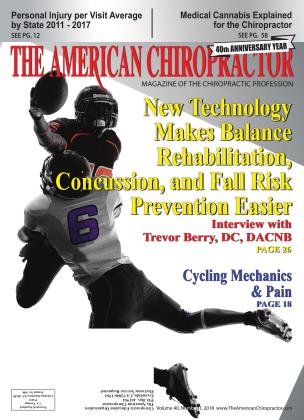
Medical Cannabis
FEATURE
Part 1
Jeffrey Tucker
DC, DACRB
North American marijuana sales grew 30% in 2016 to $6.7 billion as the legal market expands in the United States and Canada. A recent report by Arcview Market Research indicates North American
sales are projected to top $20.2 billion by 2021!.1 Like it or not, a growing number of states are becoming more and more accepting of this once illicit practice of growing, selling, and consuming. Whether or not it is legal in your state, patients are going to ask questions about cannabis. Currently there are a total of 28 states, plus the District of Columbia, with legislation passed as it relates to medicinal cannabis. There is a subtle difference between decriminalization and legalization. Medical cannabis decriminalization is generally referred to as the removal of all criminal penalties for the private possession and use of cannabis by adults, including cultivation for personal use and casual, nonprofit transfers of small amounts. Legalization is generally referred to as the development of a legally controlled market for cannabis, where consumers purchase from a safe, legal, and regulated source.
With cannabis emerging from the shadows, many of my patients seem to be making up their own minds about cannabis (medical marijuana) and discovering for themselves if it has value as a therapy, and if it is better tolerated than other medications. Some are just experimenting since the legalization in California (I practice in Los Angeles, CA). Most practitioners
"In this series of articles I will attempt to answer “What do you need to know as a practitioner and are there health benefits from cannabis?"
did not learn about cannabis in school and cannot knowledgably advise patients about dosage, side effects, or mechanism of action. A common question I hear from patients is “I have a friend taking cannabis for back pain. Should I try it for my back pain (neck ache or other ailment)?” I respond by asking “Are they smoking it, eating it, taking drops, or using a topical?” In this series of articles I will attempt to answer “What do you need to know as a practitioner and are there health benefits from cannabis?”
Medical Marijuana Dispensaries
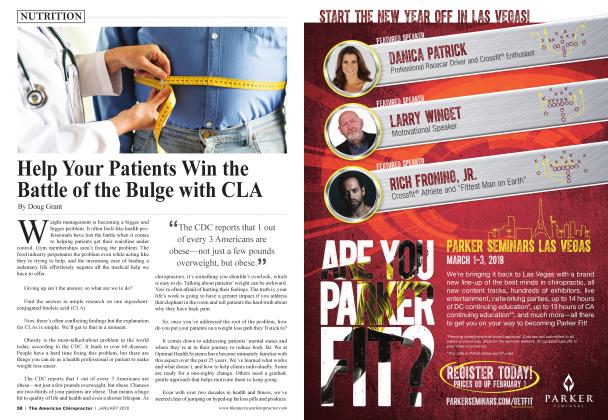
I suggest you walk into a medical cannabis (marijuana) dispensary where it is legal. You might just be amazed at the variety and choice of remedies. A patient using medical cannabis may purchase cannabis (marijuana) in a broad selection and multiple product forms—flowers, concentrates, and edibles.
You’ll see lines of medical cannabis-extracted products, which include cartridges, vape pens, and wax. You can buy diy weed and bud form in strains with names such as Skunk, ACDC, and Catatonic. You’ll also see cannabis-infused elixirs, tinctures, creams, lotions, oils, balms, and edibles, which include chocolates, chocolate bars, hard candies, gummy bears, cookies, drinks, and other foods. Other terms are “hash,” “shatter” and “wax”! None are FDA approved; however show your medical marijuana card and you can use it to treat what ails you.
History and Background
In 1965 an Israeli scientist named Raphael Mechoulam and his colleagues at the Hebrew University of Jerusalem first synthesized and explained the molecular structure of tetrahydrocannabinol (THC), marijuana’s (cannabis) principal psychoactive ingredient. In the early 1990s, Mechoulam’s team discovered what is known as the “endocannabinoid system,” a natural THC-like substance, in the brain and body (an endogenous system that starts developing before birth), which protects neurons, stimulates adult stem-cell growth, and regulates a broad range of physiological processes, including glucose metabolism, blood pressure, bone density, intestinal fortitude, and pain perception.2
When talking to patients I prefer to call marijuana cannabis. Marijuana is still a Schedule 1 drug of the Controlled Substances Act. This tier is reserved for drags with high abuse potential and no accepted medical purpose or use (like LSD). It gets confusing, especially because the United States government and even our profession is working on the “war against drags” (particularly opioid abuse). My message to patients is that Cannabis-derived medicines may have healing compounds, and we should be open to this use.
Cannabis belongs to the genus Cannabis in the family Cannabaceae and, for the purposes of production and consumption, includes three species, C. sativa (“Sativa”), C. indica (“Indica”), and C. ruderalis (“Ruderalis”). Sativa and Indica generally grow tall with some varieties reaching approximately 4 meters in height. The females produce flowers rich in tetrahydrocannabinol (THC). Ruderalis is a short plant and produces trace amounts of THC, but is very rich in cannabidiol (CBD) and which is an antagonist (inhibits the physiological action) to THC. Keep in mind, the two main cannabinoids—THC and cannabidiol, or CBD. The biggest difference, CBD doesn’t make you high.
You have most likely heard of Hemp, which comes from the Cannabis sativa L specie. Hemp and cannabis are generally distinct and are further distinguished by use, chemical makeup, and cultivation methods. Hemp, which refers to the nonpsychoactive (less than 1% THC) varieties of Cannabis sativa L, is a renewable raw material used in thousands
" There is evidence that cannabis can help manage a variety of illnesses such as epilepsy and multiple sclerosis. "
of products including health foods, body care, clothing, construction materials, biofuels, and plastic composites. The marijuana plant is made up of more than 500 chemical compounds. Many of these compounds are cannabinoids, which bind to receptors in your body and then affect your body systems, that is, immune system and brain. The science of cannabis concentrate extraction functions on the solubility of the cannabinoids and other active ingredients in the cannabis plant.
Recreational-use sellers usually categorize strains according to tetrahydrocannabinolic acid (THC) potency. THC is known as the chemical that makes you “high.” Whereas medical-use sellers in legitimate dispensaries usually categorize strains according to THC as well as CBD levels.
Medicinal Science
There is evidence that cannabis can help manage a variety of illnesses such as epilepsy and multiple sclerosis.2 Everyone in this space is hopeful that it has compounds that are antiinflammatory and tumor inhibiting. The mechanisms are not fully understood. This is a short list of what cannabinoids can help patients with:
• Cannabidolic acid (CBD A) - Anti-inflammatory, antiproliferative, intestinal antiprokinetic, nonpsychoactive.
• Cannabidiol (CBD) - This is derived from hemp. It is antidiabetic, antiepileptic, anxiolytic, reduces nausea, non-psychoactive.
• Cannabidivarin (CBDV) - bone stimulant, antiepileptic, antiemetic, nonpsychoactive.
• Cannabinol (CBN) - anti-insomnia, antispasmodic, mildly psychoactive.
• Cannabigerol - (CBG) antibacterial, bone stimulant, antiproliferative, anti-inflammatory, nonpsychoactive.
• Cannabichromene - (CBC) anti-inflammatory, antimicrobial, vasoconstriction, analgesic, antiproliferative, nonp sy choacti ve.
• Tetrahydrocannabinol (THC) - Cannabis’s potent ingredient, THC is known as the chemical that makes you “high.” It is antispasmodic, increases appetite, analgesic, reduces nausea, and is psychoactive.
• Tetrahydrocannabinolic acid (THCA) - anti-inflammatory, antispasmodic, antiproliferative, neuroprotective, antiemetic, psychoactive.
At this point if it starts with a “T” it is psychoactive. Another way to think about the difference is between high-THC cannabis plants (marijuana) and low-THCplants (industrial hemp).
Cannabis and Chiropractic
Snoop Dogg was the first celebrity to release a branded
line of cannabis products. He is a renowned cannabis connoisseur and business pioneer in the cannabis sector. I honestly don’t know very much about the different strains for smoking cannabis. However, I have learned a tremendous amount about the topical use of creams and oils for medical use. That category of topicals—the growing number of CBD-containing salves, creams, oils, and patches touted as relaxing and painrelieving—is the point at which marijuana and chiropractic intersect. Topicals help reduce muscular pain, arthritic joints, tender points, muscle spasms, phantom limb pain, peripheral neuropathy, and inflammatory skin conditions.21 have tried dozens of creams as part of my personal research in obtaining a US patent for the process of making a cream from cannabis and hemp. Some of the creams I bought for research were at Chiropractic conventions and symposiums within the past two years. Some of these creams made me feel a little dizzy, vertigo like, and that was the most uncomfortable adverse effect I have personally had with a THC or hemp CBD oil, lotion, or cream.
Here is how the current system in California works. Patients are required to obtain medical approval from their healthcare practitioner (which does not include Chiropractors) and provide a medical document to the licensed producer/ seller from which they wish to purchase cannabis. CBD from hemp is not restricted in this way. Just this week alone, the last two new patients I recommended for a trial of “oral Hemp oil drops” responded by saying “I’m already taking that.”
I am obviously in favor of medical cannabis use. I recognize the medicinal benefits of cannabis. I am also in favor that we ensure federally regulated production and standards, and establish legitimate markets that will create jobs and generate economic benefits to communities across the United States. I think Chiropractors can share the responsibility of educating people on responsible consumption of cannabis. CBD should not be restricted because there is no addictive abuse liability, and it is not used for psychoactive purposes. CBD has been consumed in one form or another for generations.
The cream I use on patients helps them with sleep, muscle aches and pain, and hard nodules on the skin (even difficult ones on the hand and feet). I recommend you look for commercial operations that are capable of producing consistent, quality medicine.
References:
1. https://www.arcviewmarketresearch.com/
2. National Academies of Sciences, Engineering, and Medicine. 2017. The health effects of cannabis and cannabinoids: Current state of evidence and recommendations for research. Washington, DC: The National Academies Press.
3. CannaBizLLC.net
Dr. Jeffrey Tucker is the current secretary treasurer of Rehab Council. He practices in Los Angeles, California. His website is www. DrJeffrey Tucker, com.