Bacterial and Viral Infections
The years 2020 and 2021 were remarkable and have left a mass paranoia of microbes in their wake. It warrants a quick discussion about microbes, specifically the bacteria and viruses that cause illness.
What Do They Have in Common?
Both bacteria and viruses are too small to be seen without a microscope. They can also cause similar symptoms, such as coughing, sore throat, fever, inflammation, vomiting, diarrhea, fatigue, cramping, etc. These are all ways that the body tries to rid itself of pathogens.
Microbes can also spread in very similar ways, including contact with infected people, coughing/sneezing, kissing, or contact with contaminated surfaces, food, or water. Both types of microbes can also cause infections that range from short lived to chronic, or even cause latent infections that can reactivate over time.
What Is Different?
Though both are small and mighty, once understood, you realize that bacteria and viruses are as different as tigers and toads.
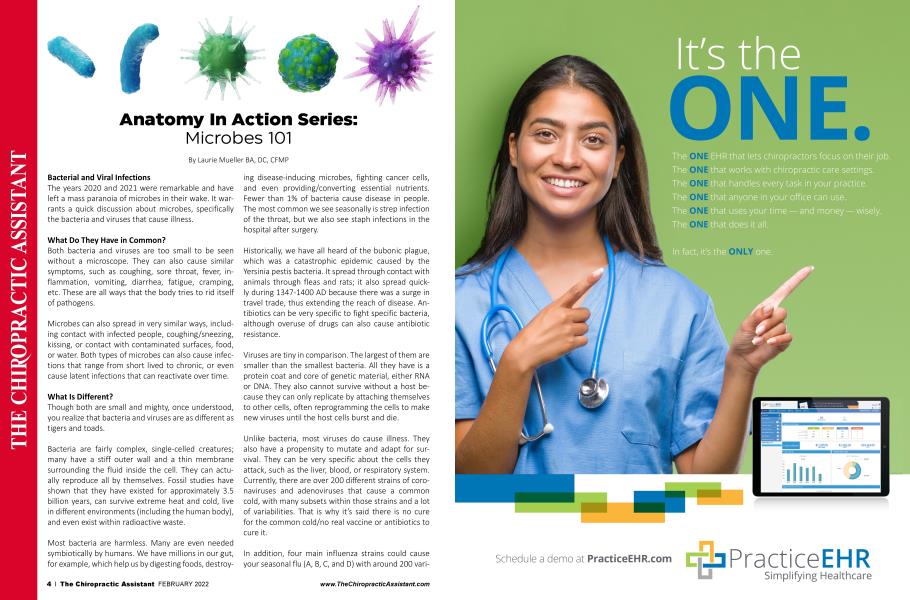
Bacteria are fairly complex, single-celled creatures; many have a stiff outer wall and a thin membrane surrounding the fluid inside the cell. They can actually reproduce all by themselves. Fossil studies have shown that they have existed for approximately 3.5 billion years, can survive extreme heat and cold, live in different environments (including the human body), and even exist within radioactive waste.
Most bacteria are harmless. Many are even needed symbiotically by humans. We have millions in our gut, for example, which help us by digesting foods, destroying disease-inducing microbes, fighting cancer cells, and even providing/converting essential nutrients. Fewer than 1% of bacteria cause disease in people. The most common we see seasonally is strep infection of the throat, but we also see staph infections in the hospital after surgery.
Historically, we have all heard of the bubonic plague, which was a catastrophic epidemic caused by the Yersinia pestis bacteria. It spread through contact with animals through fleas and rats; it also spread quickly during 1347-1400 AD because there was a surge in travel trade, thus extending the reach of disease. Antibiotics can be very specific to fight specific bacteria, although overuse of drugs can also cause antibiotic resistance.
Viruses are tiny in comparison. The largest of them are smaller than the smallest bacteria. All they have is a protein coat and core of genetic material, either RNA or DNA. They also cannot survive without a host because they can only replicate by attaching themselves to other cells, often reprogramming the cells to make new viruses until the host cells burst and die.
Unlike bacteria, most viruses do cause illness. They also have a propensity to mutate and adapt for survival. They can be very specific about the cells they attack, such as the liver, blood, or respiratory system. Currently, there are over 200 different strains of coronaviruses and adenoviruses that cause a common cold, with many subsets within those strains and a lot of variabilities. That is why it's said there is no cure for the common cold/no real vaccine or antibiotics to cure it.
In addition, four main influenza strains could cause your seasonal flu (A, B, C, and D) with around 200 variants/combinations of those as well. Classifications are based on subtypes, genetic lineages, strains, clades, and more. When flu types make headlines, they are often referred to by more complex nomenclature such as '"H1N1," which delineate specifics about subtypes. Note that seasonal flu vaccines are specific to only a handful of those 200 classifications and are predicted annually by experts. The seasonal vaccine is targeted to only a few. The subtypes, linages, subgroups, and clades are why you can still catch the flu even if you opt for the seasonal flu shot. Classifications are important as to how they impact the body and which vaccines may work against them.
Keeping a Level Head
With COVID-19 taking center stage along with developing variants, you may find that patients are a bit worried that every sore throat or sniffle is COVID-19. Help them keep a level head by reminding them how many other cold and flu variants exist. Encourage them to alleviate worry by taking a home COVID-19 test to rule it out. Empower them by continuing to recommend exercise, good sleep, hygiene, stress-reduction techniques, and nutrition to keep their immunity strong. Antioxidants are key along with specific vitamins, such as vitamin D3, and zinc, which can help ward off all microbes.
Ask Your Doc about Continuing Education!
An understanding of anatomy and clinical applicability helps CAs better communicate with patients and provide care more safely. Discover coursework designed for CAs at www.cccaonline.com and use the AMCHIRO discount code during the registration process to automatically receive a $15 discount off the regular price of the program.
Laurie Mueller, BA, DC, CFMP, served in private practice in San Diego, California. She was the postgraduate director at Palmer College from 2000 to 2010; served as the ACC postgraduate subcommittee chair for six years; peerreviewed for the Research Agenda Conference; and wrote the informal role determination study that aided in the development of FCLB's guidelines for chiropractic assistants (CCCAs). Dr. Mueller currently works as a private eLearning consultant with a focus on healthcare topics and functional medicine through her company, Impact Writing Solutions LLC, and subsidiaries CCCAonline.com and fxmedonline.com. She is a clinician, educator, and expert in online learning pedagogy.