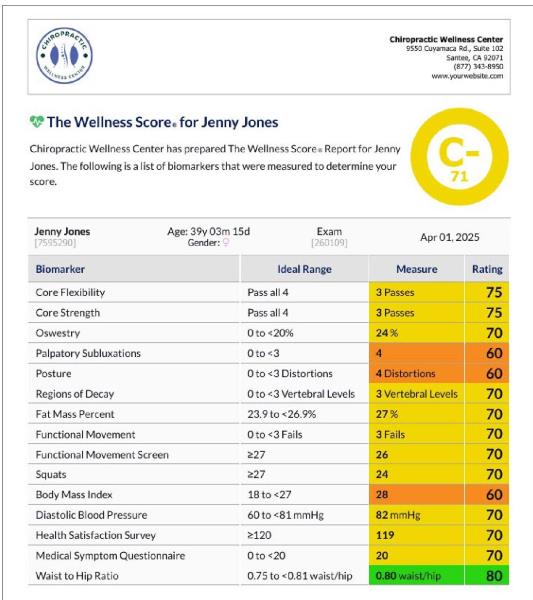
 Example of a Patient’s Wellness Score
When most new patients walk into a chiropractic office for the first time, their primary goal is simple and singular: to alleviate their pain.
Pain is a powerful motivator, driving people to seek help from a doctor, a physical therapist, or a chiropractor. The sharp, persistent ache in their lower back or the dull throb in their neck can disrupt life, making it hard to work, sleep, or even enjoy simple activities.
As chiropractors, our first and most crucial step is often to address this immediate concern, restoring function and providing relief. But what happens when the pain subsides?
All too often, patients stop coming in, believing the problem is solved. They don’t see the value in continued care because their most pressing symptom is gone. This is when a fundamental shift in perspective can make all the difference — from a symptom-centric model to a wellness-focused approach.
The pain-centric practice model might be effective at attracting patients, but it often fails to retain them for the longterm, preventative care they truly need. The solution isn’t to push for more visits but to fundamentally shift their perspective from a reactive, symptom-focused mindset to a proactive, wellness-based one.
This article explores a mindset-based approach to chiropractic care that redefines the patient-provider relationship, focusing on long-term function, health, and well-being rather than just temporary pain relief. Well examine how a system like The Wellness Score can empower patients, motivate them through their care plan, and help them understand that true health extends far beyond the absence of pain.
Imagine your car’s “check-engine” light comes on. You take it to the mechanic, they turn off the light, and you drive away. A few days later, the light comes back on. Why? Because the mechanic only addressed the symptom (the light) and not the underlying issue that caused it. The light will inevitably come back on because the root cause — misaligned wheel, faulty sensor, or clogged filter — was never fixed.
This is a perfect analogy for a pain-focused mindset in health care. Pain is your patient’s “check-engine” light. It’s a critical signal that something is wrong, and we must listen to it. However, simply “turning off the light” by masking the pain with medication or ceasing care once the symptom subsides often leads to a recurrence of the problem.
This approach fails to address the root cause of the issue, which could be poor posture, spinal misalignments (subluxations), muscle imbalances, or a sedentary lifestyle. By focusing solely on pain, we train patients to think of their health as a reactive process, and they only seek help when something is wrong.
Instead, the goal should be to get them to see their health as a proactive journey that requires consistent effort and attention. So how do you get a patient to commit to a journey they don’t yet understand?
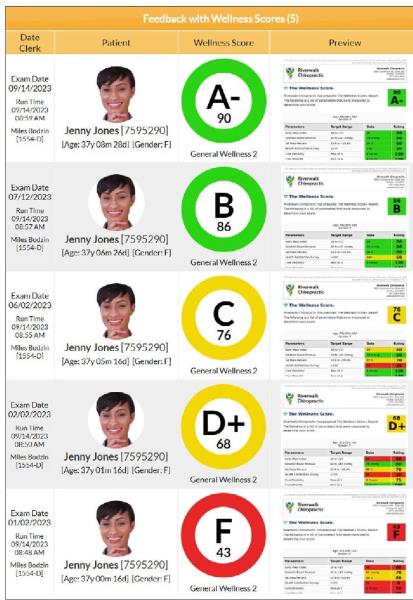 Example of a Patient Progress
To shift the patient’s mindset, chiropractors can use a powerful tool that moves the conversation beyond just pain. The Wellness Score is a patient-education tool in the form of a report card based on your exam findings.
This easy-to-understand report card will provide a comprehensive picture of a person’s overall health and spinal function. It goes beyond subjective feelings of pain and looks at measurable data. This score can be a numerical value, but its true power comes from translating it into a simple, relatable format — a letter grade.
The letter grade isn’t a judgment; it’s a baseline for progress. It’s a starting point that gives patients a clear understanding of their current state of health.
A patient might present with chronic neck pain. After their initial examination, which includes assessments such as postural analysis, range-of-motion tests, and orthopedic exams, they may be assigned a grade of D.
This might seem harsh, but it serves a crucial purpose of showing the patient that while their pain is a genuine and valid concern, it’s only one part of a larger picture. A D grade highlights that there are significant underlying issues that need to be addressed and sets a new goal to get their health to an A.
This simple letter grade transforms their mindset from a passive one (“I have pain; please fix it”) to an active one (“My health is a work in progress, and I am committed to improving it”).
Patient report cards become a powerful motivational tool throughout the patient’s entire treatment journey. Let’s consider a typical scenario.
A patient begins a care plan of two adjustments per week. Over the first few weeks, their pain levels decrease significantly. They start feeling better, and naturally, they wonder if they still need to come in so often. Often, patients drop out of care at this point, believing the problem is solved.
This is when The Wellness Score truly shines. During a reevaluation, the chiropractor can objectively demonstrate the progress that the patient has made.
The patient might be feeling much better, and a quick retest of their range of motion and other functional indicators might show a measurable improvement. The chiropractor can then show the patient their score has improved from a D to a C+.
For example, Sarah came in with chronic headaches and a D grade. After three months of care, her headaches were gone, and she had improved to a C+. She realized her journey wasn’t over, and her new goal was to reach a B.
The conversation would go something like this: “I’m so glad to hear you’re feeling less pain. That’s a huge win! As we expected, your pain has decreased, and your range of motion has improved. You’ve gone from a D to a C+. This means we’re on the right track. However, as you can see from your postural analysis and these other test results, we still have work to do to get you to an A. We’re not just trying to get rid of your pain; we’re building a foundation of long-term health.”
This approach reframes the reevaluation. It’s no longer just a check-in on symptoms; it’s a measurable milestone on the road to better health. Patients can visually see their progress, which reinforces the value of their continued care while creating a sense of accomplishment that encourages them to keep going.
Report cards are also highly effective when a patient wants to change treatment frequency. A patient who is feeling better might request to reduce visits from twice a week to once a week. Without a clear objective measure, this conversation can be challenging. The chiropractor might feel as if they’re trying to “sell” a treatment plan, and the patient might feel as if they’re being pressured into it.
With The Wellness Score, the conversation is based on data, not feelings. The chiropractor can reference the patient’s current grade and the progress they’ve made. They can explain that while a reduction in visits might be appropriate at some point, their current score and objective findings suggest that maintaining the current frequency is essential to continue progressing toward their A grade.
The chiropractor can say, “I understand you’re feeling much better, and that’s great. We’ve made significant progress, but we’re still at a C+. To truly correct the underlying issues and build a more resilient spine, we need to continue with this frequency for a bit longer. We can reevaluate in a few weeks, and if your score has improved, we can discuss a reduction then.”
This approach empowers the patient by giving them the information they need to make a more informed decision. It also reinforces the idea that their care plan isn’t arbitrary; it’s a structured and goal-oriented journey toward optimal health. The Big Picture: Health Over Pain
Ultimately, the goal of this mindset-based approach is to get patients to focus on their overall health, not just temporary pain. By using a tool like The Wellness Score, chiropractors can educate their patients on the true meaning of wellness. They can teach them that true health isn’t just the absence of pain; it’s a state of optimal physical, mental, and social well-being.
This approach fosters a partnership between the chiropractor and the patient. It empowers the patient to be an active participant in their own health journey. Instead of being a passive recipient of care, they become an empowered individual with a clear goal. They learn that regular chiropractic care, combined with other healthy lifestyle choices, is a proactive way to maintain a healthy spine and nervous system.
By moving beyond the traditional pain-centric and symptom-management model, chiropractors can help patients achieve lasting results, prevent future issues, and truly live their lives to their fullest potential. It’s a win-win for everyone involved: patients get the comprehensive care they need to thrive, and chiropractors build a practice centered on true wellness and patient empowerment.

Dr. Miles Bodzin is founder and CEO of Cash Practice Systems, a web-based software platform used by 1000’s of chiropractors for compliant care plans and payment processing. To learn more or get a demo, visit CashPractice.com or call (877) 343-8950. Dr. Bodzin can be reached at [email protected].