IT’S JANUARY, AND SO MANY ARE THINKING about diet and weight loss. Diet is often considered a four-letter word, and many who struggle with maintaining a healthy weight are looking for effective help.
The reality is that “diet” encompasses the kind of food that a person regularly eats; it is not specifically a decrease in calories. Over the years, there have been many fad diets that are successful in the short run — the Atkins diet, Zone diet, Keto diets, Paleo diets, etc. All have their success, as any reduced-calorie or foodtype restrictive diet will produce results initially.
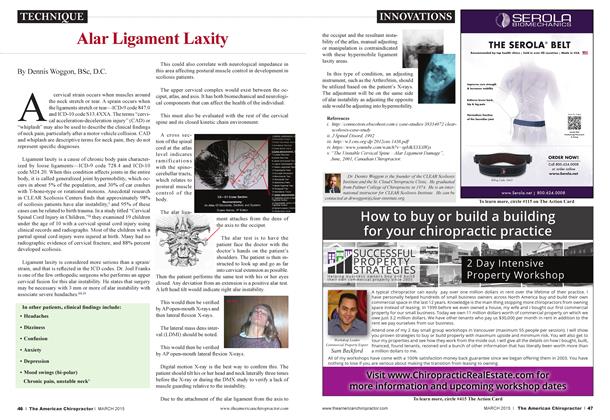
Most people who want to lose weight are looking for quick results, often disregarding the long-term outcome. However, for patients truly on a quest for health and not merely the shedding of pounds or inches, the holistic perspective of Suggestive Therapy® practiced by a skilled doctor can help them create a permanent transformation of the body, mind, and soul.
Considering the whole patient, we must first examine the body mass index (BMI) distribution and the associations with the socioeconomic range. David Bann et al. stated that “risk factors for higher BMI appear to have stronger effects at the upper BMI levels,”1 suggesting that there may be a correlation between factors such as socioeconomic status, education, and educational cognition.
Higher maternal weight may also contribute to the higher BMI of an adult individual. Patients who suffer from psychological disorders such as depression, anxiety, or eating disorders may have more difficulty maintaining a healthy weight because food often becomes a coping mechanism for other disorders.2 In these cases, BMI must be considered a symptom of these underlying functional causes.
Bariatric surgery patients who experience greater success with weight management also have realistic expectations in their weight-loss journey, and many of those patients report they are ready to deal with their underlying reasons for chronic overeating and poor dietary choices.3
The U.S. Weight Management Market Survey states that nearly $143 billion was spent on weight management in 2022, and this number is growing. Weight management is easy to understand; less caloric intake with more caloric expenditure will result in weight loss.
Doing that is harder for most patients, driving them to seek help. Why does a patient take in more calories, or why do they expend fewer calories? This question lies at the root of obesity for many. Considering the conscious choices that are often driven by concepts lurking in the subconscious portion of the patient’s mind is a factor often overlooked in weight management.
This evidence supports the need for practitioners who understand the root causes of obesity and are trained in modalities that help guide patients in creating new self-images of total health — body, mind, and soul — along with training in sound nutrition.
The practice of Suggestive Therapy® equips the doctor with multifaceted methods to determine the causes driving a patient’s disorder. Understanding how the originative or educated mind of the practitioner can contact and direct the patient’s innate, subconscious mind, the doctor confidently transfers ideas of health to the patient’s innate faculty, replacing those that caused disorder. This process is key to positive habit changes and real transformation.
Dr. Thurman Fleet based his philosophy of Suggestive Therapy upon ideals set forth by D. D. Palmer, evolving the principles from purely chiropractic philosophy to life philosophy, engaging the patient’s faith and cooperation with the doctor’s healing suggestions for a powerful outcome. While the patient may come to the practitioner to simply lose weight, it is the clinician’s duty to discover the negative inductive reasoning that has created the dysfunction and implant positive ideas of increased health, better-fitting clothes, more energy with children, exercise, etc.
Most of us have higher self-esteem when we feel as if we appear presentable to others. This certainly builds momentum as the weight-loss journey continues, but this is a slow gratification. Because weight-loss programs rarely offer a feeling of instant gratification, it rests upon the shoulders of the clinician to continue instilling trust in the process being offered. Images of positive results must be reinforced until that outcome is cemented in the mind of the patient. As small goals are reached, the clinician continues to deliver clearly defined ideas of healing to the body, mind, and soul as a unit to the patient.
“There are innumerable resources for weight loss in the world, but many people are overwhelmed with what to choose or follow, or they may not be knowledgeable enough to weed through the good choices mingled with the fictional and fad choices.”
There are innumerable resources for weight loss in the world, but many people are overwhelmed with what to choose or follow, or they may not be knowledgeable enough to weed through the good choices mingled with the fictional and fad choices. Some patients do not understand the difference between simply cutting calories versus exchanging nutrient-dense foods for non-nutrient-dense foods. From the patient’s healing perspective, confidence in their clinician’s guidance is critical because it is the key that unlocks the power within.
The development of the Composite Personality™ as taught in Suggestive Therapy explains how this doctor/patient relationship, based on confidence, enables the healing images originated by the doctor to be received by the patient’s Innate, where the ideas are received and carried out in the body and the patient’s environment. These ideas include instruction in nutritional selections, of course, but they also include other things that we surround ourselves with.
If social engagements are always around food and drink, they can be exchanged with a game of tennis or basketball, or a group walk in the park. Cognitive exchange is the beginning of habit change. Alana Mendelsohn suggests in an article on habits that “a significant portion of our daily behavior is actually driven by habit.”
All habits are of the mind, so a change in the innate behavior of the mind is required to affect long-term daily change. The studied chiropractor can begin to instill these healthy behaviors in the mind of the willing patient, adapting them over time to meet the patient’s changing needs, guiding and supporting the removal of ineffective behaviors in the patient’s weight-loss journey, leading to a life of better overall health.
This course of holistic treatment is more beneficial to the patient than providing simple weight loss. It can also be practiced with patients who do not need to lose physical weight but require better nutritional choices in their overall dietary intake.
Likewise, Suggestive Therapy can be utilized with patients who need more movement in their daily “diet” of activity, leading to greater mobility and a more rewarding life. There is an idea of the “perfect health concept” to be explored by both doctor and patient for each individual case.
Treating the whole patient through the practice of Suggestive Therapy has lasting benefits for the doctor too. The rapport that is developed in the doctor/patient relationship throughout the healing journey naturally results in quality referrals by satisfied patients, increasing the practice and creating a sense of community based on attainable long-term health.
Colleen Steinkoenig, DC, is a chiropractor and educator with 25 years of experience in the education of chiropractors and graduate-level instruction to other healthcare clinicians and pre-medical sciences. Believing the holistic approach is “best practice” for health care, she is a lifelong learner, creating an apt integration with Concept-Therapy®. Contact her at [email protected].
1. Bann D, Fitzsimons E, Johnson W. Determinants of the population health distribution: an illustration examining body mass index. Int J Epidemiol. 2020 Jun l;49(3):731-737. doi: 10.1093/ije/dyz245. PMID: 32737506; PMCID: PMC7394943.
2. Collins J, Bentz, J. Behavioral and psychological factors in obesity [Internet]. Lancaster, PA: The Journal of Lancaster General Hospital. 2009;4(4). Available from: https://www.jlgh.org/Past-Issu...
3. van Hout GC, Verschure SK, van Heck GL. Psychosocial predictors of success following bariatric surgery. Obes Surg. 2005 Apr; 15(4): 55260. doi: 10.1381/0960892053723484^ PMID: 15946437.