“An unhealthy intestinal microbiota will relentlessly push you down the road to rotundity.”
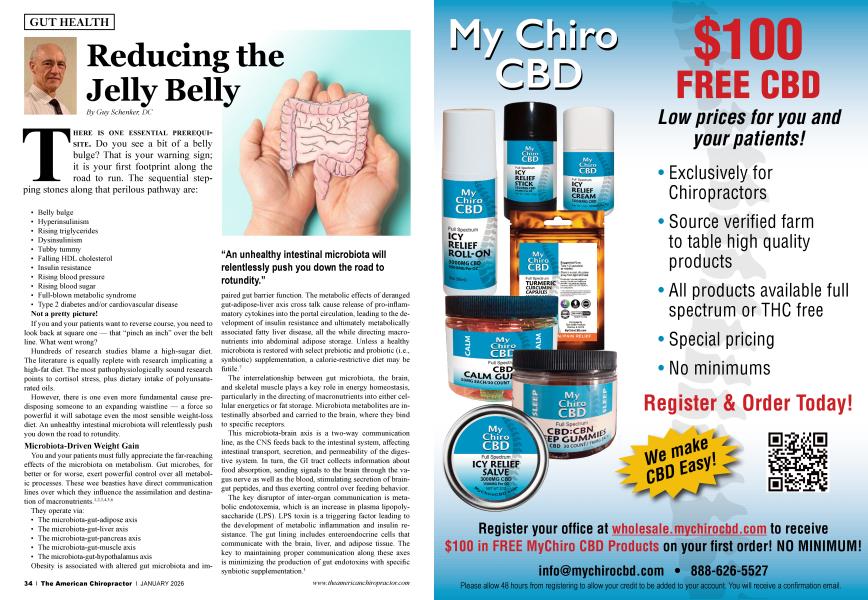
THERE IS ONE ESSENTIAL PREREQUISITE. Do you see a bit of a belly bulge? That is your warning sign; it is your first footprint along the road to run. The sequential stepping stones along that perilous pathway are:
Not a pretty picture!
If you and your patients want to reverse course, you need to look back at square one — that “pinch an inch” over the belt line. What went wrong?
Hundreds of research studies blame a high-sugar diet. The literature is equally replete with research implicating a high-fat diet. The most pathophysiologically sound research points to cortisol stress, plus dietary intake of polyunsaturated oils.
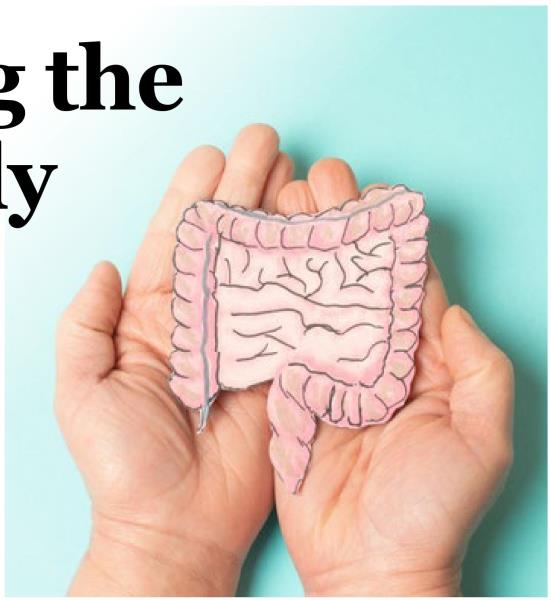
However, there is one even more fundamental cause predisposing someone to an expanding waistline — a force so powerful it will sabotage even the most sensible weight-loss diet. An unhealthy intestinal microbiota will relentlessly push you down the road to rotundity.
You and your patients must fully appreciate the far-reaching effects of the microbiota on metabolism. Gut microbes, for better or for worse, exert powerful control over all metabolic processes. These wee beasties have direct communication lines over which they influence the assimilation and destination of macronutrients.L2-3-4-5-6
They operate via:
• The microbiota-gut-adipose axis
• The microbiota-gut-liver axis
• The microbiota-gut-pancreas axis
• The microbiota-gut-muscle axis
• The microbiota-gut-hypothalamus axis
Obesity is associated with altered gut microbiota and impaired gut barrier function. The metabolic effects of deranged gut-adipose-liver axis cross talk cause release of pro-inflammatory cytokines into the portal circulation, leading to the development of insulin resistance and ultimately metabolically associated fatty liver disease, all the while directing macronutrients into abdominal adipose storage. Unless a healthy microbiota is restored with select prebiotic and probiotic (i.e., synbiotic) supplementation, a calorie-restrictive diet may be futile.7
The interrelationship between gut microbiota, the brain, and skeletal muscle plays a key role in energy homeostasis, particularly in the directing of macronutrients into either cellular energetics or fat storage. Microbiota metabolites are intestinally absorbed and carried to the brain, where they bind to specific receptors.
This microbiota-brain axis is a two-way communication line, as the CNS feeds back to the intestinal system, affecting intestinal transport, secretion, and permeability of the digestive system. In turn, the GI tract collects information about food absorption, sending signals to the brain through the vagus nerve as well as the blood, stimulating secretion of braingut peptides, and thus exerting control over feeding behavior.
The key disruptor of inter-organ communication is metabolic endotoxemia, which is an increase in plasma lipopolysaccharide (LPS). LPS toxin is a triggering factor leading to the development of metabolic inflammation and insulin resistance. The gut lining includes enteroendocrine cells that communicate with the brain, liver, and adipose tissue. The key to maintaining proper communication along these axes is minimizing the production of gut endotoxins with specific synbiotic supplementation.1
“Studies show that adding the prebiotic inulin to the diet of obese women increases the count of bacteria that reduce systemic inflammation”
The breakdown in gut barrier function is especially associated with obesity in individuals for whom even extraordinary calorie-restrictive diets yield mostly frustration in achieving weight loss and lipid control. Dietary sugars and carbohydrates are very easily converted to triglycerides. Dietary polyunsaturated fatty acids also increase systemic pro-inflammatory free fatty acids and their derivatives in these particular patients by increasing plasma LPS.
The most direct way to control obesity and the consequences of metabolic syndrome in these patients is to reduce LPS production in the gut by synbiotic supplementation. Synbiotics reinforce the gut barrier, promote gut hormones that control appetite, promote glucose homeostasis, decrease systemic inflammation and obesity, and counteract hepatic steatosis and hepatic insulin resistance.8
Restoration of an anti-obesity microbiota cannot be achieved with any random assortment of preand probiotics. Certain prebiotics are far more effective than others. A typical probiotic supplement is likely to yield as many weight-gainpromoting critters as weight-loss-inducers. Specificity is key to the essential metabolic balancing.
Evidence suggests that the systemic inflammation observed in obesity does not result from the accumulation of fat but causes it. Studies show that adding the prebiotic inulin to the diet of obese women increases the count of bacteria that reduce systemic inflammation. The intervention works best on patients who, at the outset, already harbor microbiota associated with a low-inflammatory status.
In one study, microbes were transplanted from lean donors to patients recently diagnosed with metabolic syndrome. The recipients saw improvements in insulin sensitivity and the enrichment of their microbiota.
However, six months after the bacterial transplant, the patients had relapsed, with metabolic improvements fading and the precursors to type 2 diabetes returning. The researcher emphasized that the long-term key to success was not transplanting microbes but fostering an ideal environment for healthy microbe development through prebiotic supplementation.7-9
Recent epidemiological studies show that eating “fast food” items, such as potato chips, increases the likelihood of obesity (no surprise!). There is also evidence that the immune system plays a critical role in this process.
Surprising benefits on the obesity-generating effects of “fast food” are found with probiotic L. reuteri supplementation. In fact, L. reuteri therapy alone is sufficient to change the proinflammatory immune cell profile and prevent abdominal fat pathology as well as age-associated weight gain in mice and does so regardless of their baseline diet. In other words, the effect of L. reuteri is so powerful that the development of obesity is inhibited to some degree even when the “fast food” diet is maintained.10
It is interesting that while synbiotic supplementation is the most direct and powerful way to favorably influence the communication line of the gut with the brain, the liver, adipose tissue, muscle tissue, and the pancreas, one particular bacterial species actually disrupts this communication line. That species is the ever-popular Lactobacillus acidophilus.
Yes, the most common of all probiotic supplements makes your patients fat, sick, and old. Lactobacillus acidophilus distorts the communication line between the gut and adipose tissue, increasing the obesity-generating messenger CB2. Indeed, abdominal weight gain and pathologies associated with insulin resistance can be exacerbated by L. acidophilus.11
Human studies show that there are at least 100 species that differ between a control diet and a synbiotic-supplemented diet. This response to synbiotic supplementation is huge. Of the more than 100 species that are altered by synbiotics, eight of the species are shown to increase more than tenfold, and eight of the species are decreased by more than tenfold.
These studies permit the identification of bacteria that are promoted using a synbiotic approach. Other studies show that synbiotic supplementation decreases the ratio of firmicutes to Bacteroidetes, the ratio that is elevated in obesity.12
Obviously, random probiotic supplementation is not the answer to weight loss. There is no way to supplement with 100 different species of probiotics, most of which are obscure and some of which have not even yet been identified. Only specific synbiotic blends will achieve a major impact on gut barrier function and reduce the production of endotoxins that cause obesity, high triglycerides and cholesterol, high blood pressure, cardiovascular disease, and diabetes.

Dr. Guy Schenker, a Pennsylvania chiropractor since 1978, is the developer of the Nutri-Spec System of Clinical Nutrition, which eschews symptom-based nutrition in favor of individualized metabolic therapy. Nutri-Spec offers a Stage of Life Diphasic Nutrition Plan (SOLID DNP), empowering each patient to live stronger longer. Contact information: 800-736-4320, [email protected], or through Nutri-Spec.net.
1. Xiao H, Kang S. The role of the gut microbiome in energy balance with a focus on the gut-adipose tissue axis. Front Genet. 2020 Apr 7:11:297. doi: 10.3389/fgene.2020.00297. PMID: 32318095; PMCID: PMC7154186.
2. Yin Y, Guo Q, Zhou X, Duan Y, Yang Y, Gong S, Han M, Liu Y, Yang Z, Chen Q, Li F. Role of brain-gut-muscle axis in human health and energy homeostasis. Front Nutr. 2022 Oct 6;9:947033. doi: 10.3389/ fiiut.2022.947033. PMID: 36276808; PMCID: PMC9582522.
3. Yin Y, Guo Q, Zhou X, Duan Y, Yang Y, Gong S, Han M, Liu Y, Yang Z, Chen Q, Li F. Role of brain-gut-muscle axis in human health and energy homeostasis. Front Nutr. 2022 Oct 6;9:947033. doi: 10.3389/ fiiut.2022.947033. PMID: 36276808; PMCID: PMC9582522.
4. Konrad D, Wueest S. The gut-adipose-liver axis in the metabolic syndrome. Physiology (Bethesda). 2014 Sep;29(5):304-13. doi: 10.1152/ physiol.00014.2014. PMID: 25180260.
5. Svegliati-Baroni G, Patricio B, Lioci G, Macedo MP, Gastaldelli A. Gut-pancreas-liver axis as a target for treatment of NAFLD/NASH. Int J Mol Sci. 2020 Aug 13;21(16):5820. doi: 10.3390/ijms21165820. PMID: 32823659; PMCID: PMC7461212.
6. Chen LH, Chang SS, Chang HY, Wu CH, Pan CH, Chang CC, Chan CH, Huang HY. Probiotic supplementation attenuates age-related sarcopenia via the gut-muscle axis in SAMP8 mice. J Cachexia Sarcopenia Muscle. 2022 Feb;13(l):515-531. doi: 10.1002/jcsm. 12849. Epub 2021 Nov 11. PMID: 34766473; PMCID: PMC8818665.
7. Konrad D, Wueest S. The gut-adipose-liver axis in the metabolic syndrome. Physiology (Bethesda). 2014 Sep;29(5):304-13. doi: 10.1152/ physiol.00014.2014. PMID: 25180260.
8. Geng J, Ni Q, Sun W, Li L, Feng X. The links between gut microbiota and obesity and obesity related diseases. Biomed Pharmacother. 2022 Mar;147:112678. doi: 10.1016/j.biopha.2022.112678. Epub 2022 Feb 5. PMID: 35134709.
9. Cerdo T, Garcia-Santos JA, G Bermudez M, Campoy C. The role of probiotics and prebiotics in the prevention and treatment of obesity. Nutrients. 2019 Mar 15;11(3):635. doi: 10.3390/null030635. PMID: 30875987; PMCID: PMC6470608.
10. Poutahidis T, Kleinewietfeld M, Smillie C, Levkovich T, Perrotta A, Bhela S, Varian BJ, Ibrahim YM, Lakritz JR, Kearney SM, Chatzigiagkos A, Haller DA, Alm EJ, Erdman SE. Microbial reprogramming inhibits Western diet-associated obesity. PLoS One. 2013 Jul 10;8(7):e68596. doi: 10.1371/journal.pone.0068596. PMID: 23874682; PMCID: PMC3707834.
11. Crovesy L, Ostrowski M, Ferreira DMTP, Rosado EL, Soares-Mota M. Effect of Lactobacillus on body weight and body fat in overweight subjects: a systematic review of randomized controlled clinical trials. Int J Obes (Lond). 2017 Nov;41(ll):1607-1614. doi: 10.1038/ijo.2017.161. Epub 2017 Jul 10. PMID: 28792488.
12. Sato S, Arai S, Kato K, Yoshida K, Iwabuchi N, Sagami T, Tanaka M. Effects of Bifidobacterium longum BB536 and Bifidobacterium breve MCC1274 on body composition in normal and overweight adults in randomized placebo-controlled study, nutrients. 2024 Mar 13;16(6):815. doi: 10.3390/nul6060815. PMID:'38542727; PMCID: PMC10974859.