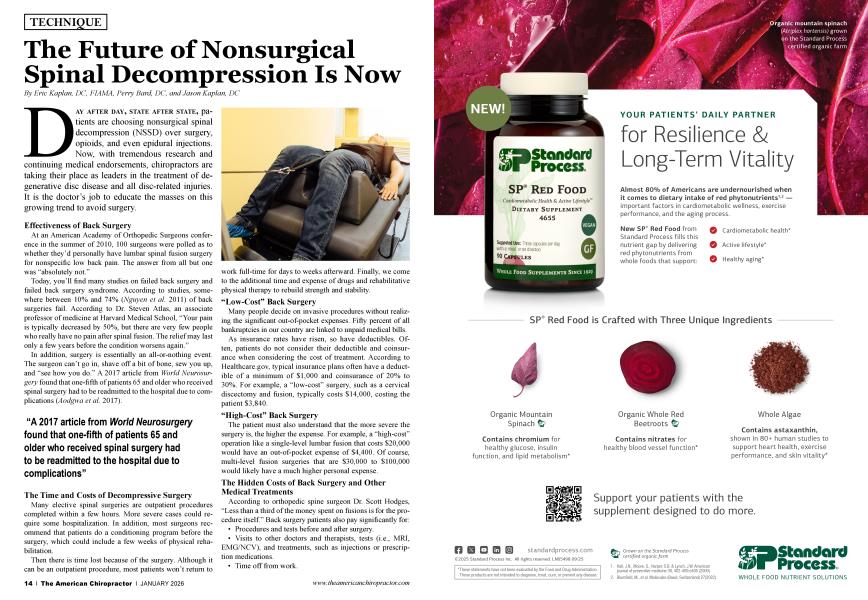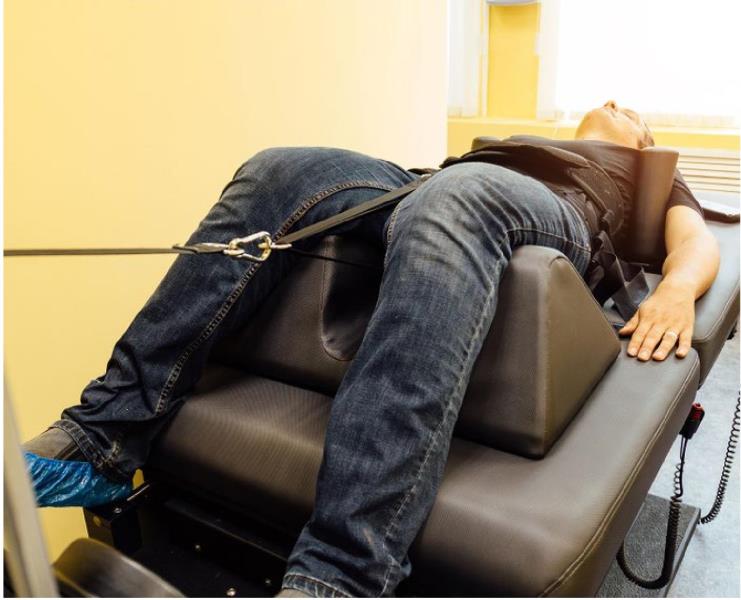
DAY AFTER DAY, STATE AFTER STATE, patients are choosing nonsurgical spinal decompression (NSSD) over surgery, opioids, and even epidural injections. Now, with tremendous research and continuing medical endorsements, chiropractors are taking their place as leaders in the treatment of degenerative disc disease and all disc-related injuries. It is the doctor’s job to educate the masses on this growing trend to avoid surgery.
At an American Academy of Orthopedic Surgeons conference in the summer of 2010, 100 surgeons were polled as to whether they’d personally have lumbar spinal fusion surgery for nonspecific low back pain. The answer from all but one was “absolutely not.”
Today, you’ll find many studies on failed back surgery and failed back surgery syndrome. According to studies, somewhere between 10% and 74% (Nguyen et al. 2011) of back surgeries fail. According to Dr. Steven Atlas, an associate professor of medicine at Harvard Medical School, “Your pain is typically decreased by 50%, but there are very few people who really have no pain after spinal fusion. The relief may last only a few years before the condition worsens again.”
In addition, surgery is essentially an all-or-nothing event. The surgeon can’t go in, shave off a bit of bone, sew you up, and “see how you do.” A 2017 article from World Neurosurgery found that one-fifth of patients 65 and older who received spinal surgery had to be readmitted to the hospital due to complications (Aodgwa et al. 2017).
“A 2017 article from World Neurosurgery found that one-fifth of patients 65 and older who received spinal surgery had to be readmitted to the hospital due to complications”
Many elective spinal surgeries are outpatient procedures completed within a few hours. More severe cases could require some hospitalization. In addition, most surgeons recommend that patients do a conditioning program before the surgery, which could include a few weeks of physical rehabilitation.
Then there is time lost because of the surgery. Although it can be an outpatient procedure, most patients won’t return to work full-time for days to weeks afterward. Finally, we come to the additional time and expense of drugs and rehabilitative physical therapy to rebuild strength and stability.
Many people decide on invasive procedures without realizing the significant out-of-pocket expenses. Fifty percent of all bankruptcies in our country are linked to unpaid medical bills.
As insurance rates have risen, so have deductibles. Often, patients do not consider their deductible and coinsurance when considering the cost of treatment. According to Healthcare.gov, typical insurance plans often have a deductible of a minimum of $1,000 and coinsurance of 20% to 30%. For example, a “low-cost” surgery, such as a cervical discectomy and fusion, typically costs $14,000, costing the patient $3,840.
The patient must also understand that the more severe the surgery is, the higher the expense. For example, a “high-cost” operation like a single-level lumbar fusion that costs $20,000 would have an out-of-pocket expense of $4,400. Of course, multi-level fusion surgeries that are $30,000 to $100,000 would likely have a much higher personal expense.
According to orthopedic spine surgeon Dr. Scott Hodges, “Less than a third of the money spent on fusions is for the procedure itself” Back surgery patients also pay significantly for:
• Procedures and tests before and after surgery.
• Visits to other doctors and therapists, tests (i.e., MRI, EMG/NCV), and treatments, such as injections or prescription medications.
• Time off from work.
Often, patients are unable to work before surgery because of the pain. Following surgery, patients could miss weeks or months during the recovery process. Low back pain is the leading cause of disability worldwide.
Recent studies also document a:
• 629% increase in Medicare expenditures for epidural steroid injections.
• 423% increase in expenditures for opioids for back pain.
• 307% increase in the number of lumbar MRIs among Medicare beneficiaries.
Spinal decompression surgery is another option for treating certain types of back pain, but it is usually a last resort. If other measures don’t work, your doctor may suggest surgical spinal decompression for bulging or ruptured discs, bony growths, or other spinal problems. For decompression and fusion surgery, one or more spinal joints are immobilized, typically using a plate and screws.
Surgery may help relieve symptoms from pressure on the spinal cord and nerves, including pain, numbness, tingling, and weakness. The objective of decompression surgery is to reduce pressure on the nerves exiting from the spine.
Surgery does not address what caused the condition in the first place, though. At best, it may reduce the patient’s symptoms. In most cases, disc herniation/degeneration, stenosis, spondylolisthesis, and degenerative arthritis are caused by abnormal spinal mechanics, including altered posture, muscle imbalances, and impaired strength and stability.
As with any surgery, there are common risks for spinal decompression surgery:
• Infection
• Bleeding and blood clots
• Allergic reaction to anesthesia
• Nerve or tissue damage
• Another risk of surgery is that it may not improve back pain much
Patients must ask about their risk versus the reward to decide if surgery is the option for them. They should also question if there is another way to accomplish decompression.
In an article in a medical trade journal, orthopedic surgeon Terry Amaral made a note of some things that can go wrong that are rarely mentioned to surgical candidates. “The spinal cord is right next to where we are putting the screws in; we are working near where the nerve roots exit,” he observed. “If you perforate that area, the patient will experience weakness or even paralysis. Then, in the front of the spine, there are other things to be concerned about, like the aorta, the vena cava, the lungs.”
Other risks are unspecified. The spinal screws are misplaced in 5% to 10% of all fusion procedures. After spinal fusion, infection is common. Nerves may be jostled and inflamed, resulting in dull, diffuse, aching, or sharp stinging pain in the legs that may or may not ever go away. Supportive spinal ligaments and muscles disturbed during the surgery rarely work with the same efficiency, and that incompetence may result in more back pain.
“Surgery does not address what caused the condition in the first place, though. At best, it may reduce the patient’s symptoms.”
According to a 2017 study published in SPINE, one out of five spine-surgery patients was hospitalized again within 30 days. Nearly 60% were emergency room visits, usually for infection and unmanageable pain. Over 26% of those patients ultimately were scheduled for an additional surgical procedure.
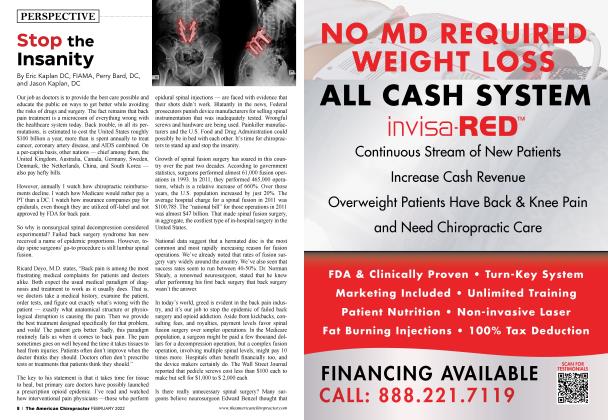
Back surgery is still growing in record numbers in our country. Surgery is big business that is often governed by greed. Patients who have not done well are referred to return to the operating room repeatedly, losing ground after each procedure.
Despite risks and mediocre outcomes, the number of spinal fusions performed in the United States grew from 61,000 in 1953 to more than 465,000 in 2011 — more than a 600% increase, accounting for more than 60% of the spinal fusion surgery performed worldwide. It’s the most expensive form of elective surgery in the United States, costing about $40 billion annually.
About one in five patients who undergo spinal surgery for a degenerative disorder return for a revision procedure — a second operation. Even when the fusion is deemed to be “radiologically perfect” — meaning that an X-ray shows the vertebrae have grown together and the hardware is positioned correctly — the fusion itself imposes increased stress on other vertebral segments.
That often results in “adjacent segment deterioration,” a condition where the vertebral level above or below degrades, causing more pain. A second back surgery only has a 30% chance of success. That prognosis drops to 15% for a third back surgery and 5% for a fourth.
Oregon Health and Science University spine medicine researcher Roger Chou believes that surgeons should be required to reveal the odds to their patients before going forward. “If (the surgeon) said, ‘Yes, we can do this $70,000 surgery, but you know, there’s still more than a 50% chance that you’re going to have a lot of pain, and you still won’t be able to work, and you’re going to need pain medicine, and you’ll have complications related to the surgery, and all this is well documented, then most people would say, T don’t want it.’”
Nonsurgical spinal decompression was invented because of poor success rates and high incidence of complications for spinal surgery. In 1951, medical researcher Dr. Allan Dyer, MD, Ph.D., created a therapy device to reduce nerve compression mechanically.
Combining his medical understanding with basic physics principles, Dr. Dyer reasoned that applying a sufficient axial load to the spine would create a vacuum in the disc that could reduce the protrusion of a herniated disc. The device helped Dr. Dyer find relief from his back pain, so it was quickly embraced by the conservative healthcare community.
DISC Centers of America now has over 250 clinics in 46 states offering decompression treatments that are drug-free, nonsurgical, safe, and pain-free. We use a unique and comprehensive treatment approach that provides lasting relief so patients can regain their quality of life. Treatment for spine-related conditions often includes:
Nonsurgical spinal decompression to reduce nerve pressure and repair damaged discs. Although many medical doctors now utilize nonsurgical spinal decompression, the chiropractic difference is the ability to handle the kinesiopathology, or the subluxation complex associated with degenerative disc disease and disc disorders. Integrated functional rehabilitation to restore control, strength, and endurance.
On a weekly basis, Dr. Bard and I receive testimonials from doctors all over the country, changing lives. It is time that chiropractic is no longer called “alternative” care; surgery should be the alternative.
Spinal decompression is changing the world one disc at a time. I am proud to be one of the founding partners of DCOA with my partner, Dr. Perry Bard. Now, we are excited that Life University will be opening a Disc Centers of America, Life University Outpatient Clinic in Marietta, Georgia. This is an exciting time for chiropractic and the profession, and we are proud to stand at the forefront.


Dr. Eric Kaplan and Dr. Perry Bard, are business partners of over 32 years. They have developed Disc Centers of America & Concierge Coaches, now in the eleventh year, as well as the first and largest National Certification Program for Non-Surgical Spinal Decompression. Currently, they have over 150 clinics using their Disc Centers of America brand and lead ongoing success training events throughout the year. For more information on coaching, spinal decompression, or seminars, visit www.TheChiroEvent.com or www. DecompressionCertified.org, or call the Chiropractic Q&A Hotline at 888-990-9660.
Dr. Jason Kaplan is a graduate of PARKER University. Along with his wife Dr. Stephanie Kaplan, they practice in Wellington Florida. Jason is an Instructor for Disc Centers of America. He has been recognized and honored by the International Disc Education Association and serves on the Medical Advisory Board for Non-Surgical Spinal Decompression. He teaches technique at the National Certification Program at Life University and is considered a Master on Non Surgical Spinal Decompression. www.WellinqtonDisccenter.com.