Having been in practice for many years and having the honor of working with many high-level athletes, I am always on a quest to keep active individuals active, prevent injury, and enhance performance.
Of course, many time-earned tricks, skills, and tools are needed for such an endeavor. One of those skills is something I have spent years researching and testing — unpeeling the kinetic chain.
A multitude of research articles are available for anyone interested in diving deep into the biomechanics of human movement and its effects on injury, performance, and movement optimization. Becoming familiar with the biomechanics of human movement allows us, as professionals, to better assess the cause of injury and identify the key factor(s) that may prevent healing, create a redundant injury, or limit performance.
One example, and an essential first step in assessing the kinetic chain, is to examine the plantar vault. The plantar vault refers to the integrated system of arches of the feet that provides stability and elasticity during weight-bearing and locomotion. It is composed of three interdependent arches: medial longitudinal, lateral longitudinal, and transverse, which together form a dome-like structure across the plantar surface.
Each bone, ligament, and muscle in the foot plays a pivotal role in providing stability and control for the biomechanics of the entire body. Therefore, assessing the plantar vault’s performance is an essential aspect of unpeeling the kinetic chain and uncovering the potential root cause of injury or performance limitations.
As an example, we do know that an athlete who is a supinator is more likely to sustain a bony injury in the lower extremity, such as a stress fracture or pre-stress fracture, because supination alters the kinetic chain of shock absorption in the body. Actually, a supinator is most often someone with the loss of a cervical curve, often termed “military neck.”
That loss of spinal curves increases an individual’s risk of disc pathology because a straight spine lacks the shock-absorbing qualities of a curved spine. Making a correction with a custom, flexible orthotic would prevent injury in these athletes by restoring the kinetic chain and optimizing shock absorption from the ground up.
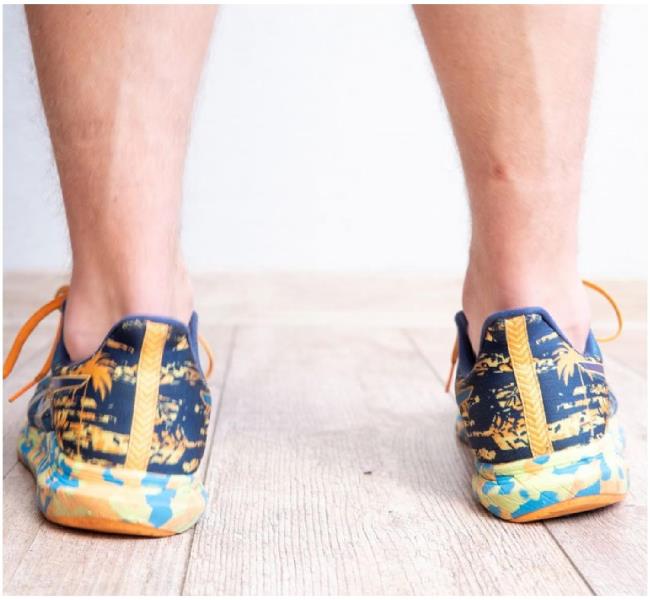
A second, even more common example is an athlete who is a hyperpronator. Hyperpronation can be a result of several factors, such as forward head carriage or a collapse of the medial longitudinal arch, to name just a couple.
The medial longitudinal arch consists of nine bones, four ligaments, and seven muscles. The collapse of this arch leads to ligament laxity, muscular weakness, and articular dysfunction that traverses up the kinetic chain from the feet to the head.
Research demonstrates that a hyperpronator is more prone to soft-tissue injuries, core muscle misfiring, and delayed erector spinae activation.1 The faults in the kinetic chain of a hyperpronator stack up quickly, including plantar fasciitis, Achilles tendinopathy, medial knee stress, increased anterior hip pathology, increased lumbar posterior element stress, increased thoracic kyphosis, decreased shoulder range of motion, and increased forward head carriage.
Neves et al. conducted interesting research on the efficacy of orthotic use, which demonstrated a significant reduction in running-related injuries (control group versus orthotic group — 37% versus 24%, respectively). Additionally, the study also revealed a 40% reduction in the risk of developing lower limb injuries.2 Research like this is growing and expanding as our awareness of the body’s interlinking systems — the kinetic chain — continues to unfold.
I am frequently asked about the different types of orthotics and what will work best for patients. As we well know, no two patients are the same. Taking that into consideration, a custom, flexible orthotic is a better fit to accommodate those differences.
One obvious but often overlooked aspect is left versus right foot variability. We very infrequently use our plantar vault symmetrically, and the correction should accommodate that.
Additionally, the need for shock absorption and the movement of each joint in the foot is essential for the normal, healthy function of the plantar vault, enhanced balance, and proprioception. Some of these factors are not considered with an off-the-shelf or rigid orthotic, which could render the correction ineffective for a patient and unsuccessful for a practitioner attempting to achieve a sustainable correction of the kinetic chain.
As a good first step in kinetic chain correction for sustained patient success, it may be beneficial to evaluate and correct the plantar vault. As we make this correction, we can then reevaluate the regional and global effects on injury or performance as we continue to correct, balance, strengthen, and align the body toward optimal function. This correction should effectively support and unpeel the kinetic chain that may be limiting performance, delaying recovery, or predisposing the athlete to injury.
Research continues to emerge on enhanced performance and reduced injuiy rates associated with the use of custom, flexible orthotics in active individuals. This research will continue to guide practitioners in a treatment plan of care that will effectively and expeditiously lead patients to sustained health and optimal performance.

Dr. Christine Foss is the Director of the Certified Chiropractic Sports Physician Program for Northeast Chiropractic College and Director of Education for the International Certification of Sports Chiropractic. She was named the 2020 American Chiropractic Association Sports Council Chiropractor of the Year and was the 2023 International Federation of Sports Chiropractic Educator of the Year. She is currently the director and lead instructor of the Northeast Chiropractic College “Certified Chiropractic Sports Physician” program. Dr. Foss is also an acupuncturist. Learn more at www.footlevelers.com/more
References
1. Yazdani F. Razeghi M. Karimi MT. Salimi Bani M. Bahreinizad H. Foot hyperpronation alters lumbopelvic muscle function during the stance phase of gait. Gait Posture. 2019 Oct;74:102-107. doi: 10.1016/j.gaitpost.2019.08.022. Epub 2019 Aug 31. PMID: 31499403.
2. Pires Neves M. Sena da Conccicao C. Lucareli PRG. Barbosa RSDS. Vieira JPBC. Brasileiro AJAL. da Silva GF. Gomes-Neto M. Effects of Foot Orthoses on Pain and the Prevention of Lower Limb injuries in Runners: Systematic Review and Meta-Analysis. J Sport Rehabil. 2022 Jul 12:31(8): 1067-1074. "doi: 10.1123/jsr.2021-0302. PMID: 35894921.