Intuitively, we know that toxins can’t be good for optimal functioning of our cells, but how exactly do they contribute to aging?
In May 2025, The American Chiropractor published my article titled “Cellular Senescence: Why we need to pay attention.” Senescent cells lose the ability to divide, but they continue to accumulate and release what’s known as SASP — senescence-associated secretory phenotype — and their inflammatory cytokine production is a hallmark of aging.
Toxins are known to add to the accumulation of senescent cells. Toxins infiltrate our bodies and disrupt the delicate balance of all cellular functions, resulting in a downward spiral of inflammation, oxidation, tissue/DNA damage, impaired detox and enzymatic reactions, and cellular dysfunction.1
Unfortunately, the SASP secretions that ooze from senescent cells only increase toxicity. So, what can we do about this toxic load? Reducing exposure is one way, and detoxing the body of these toxins is another.
Reducing exposure: To reduce toxic exposure, we have to be aware of what is entering our bodies so that we can eliminate or mitigate the exposure. There are many toxic exposures, but two that are worth mentioning here to increase awareness are a toxin that some believe is because of the major exposure we endure — air pollution2— and another is one of the most insidious that has come to light in recent years — microplastics.3
Air pollution is an established health concern and one of the principal causes of premature mortality globally, with vehicle traffic as a leading contributor. Being inside our cars does not protect us from traffic pollution; in fact, many agree that surprisingly large effects result from breathing fumes inside the car.
According to the World Health Organization, shortand long-term exposure to air pollution has been linked to a wide range of health problems, including cardiovascular, lung issues, weight problems, etc.
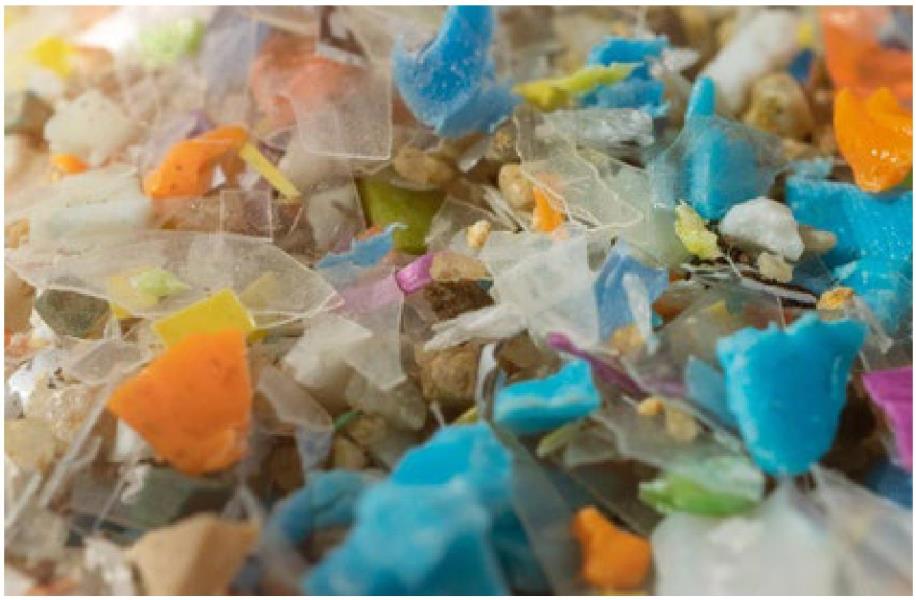
The World Wildlife Foundation conducted research that concluded that the average human consumption of plastic in one week is equivalent to eating a credit card. Another group, known as the Environmental Working Group, estimates that one person consumes 12 plastic shopping bags a year.
Regardless of the estimates, one thing is clear — plastic is finding its way into our bodies, organs, arteries, and brains. Obvious sources are plastic bags, cups, water bottles, and togo containers (should never be used to heat or freeze), as well as more unexpected items, such as polyester clothing and synthetic carpet fibers.3
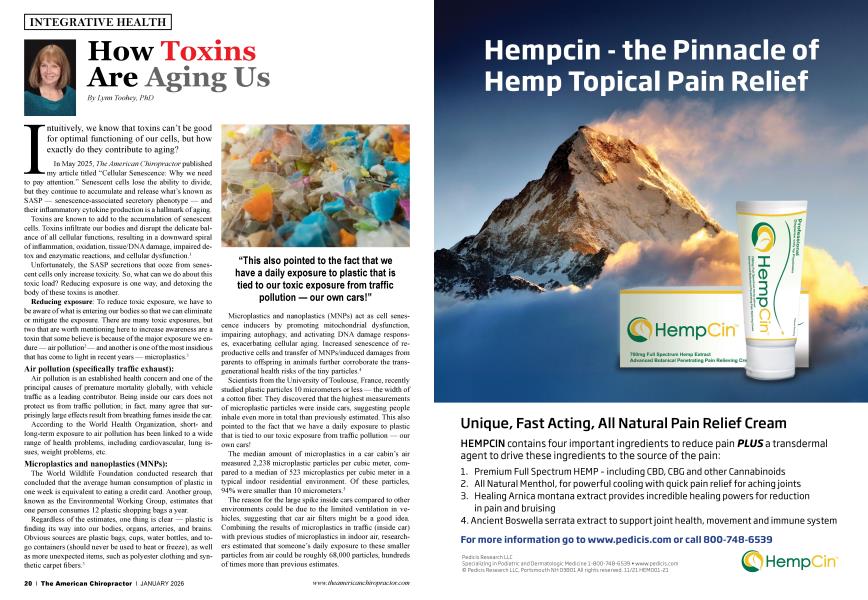
Microplastics and nanoplastics (MNPs) act as cell senescence inducers by promoting mitochondrial dysfunction, impairing autophagy, and activating DNA damage responses, exacerbating cellular aging. Increased senescence of reproductive cells and transfer of MNPs/induced damages from parents to offspring in animals further corroborate the transgenerational health risks of the tiny particles.4
Scientists from the University of Toulouse, France, recently studied plastic particles 10 micrometers or less — the width of a cotton fiber. They discovered that the highest measurements of microplastic particles were inside cars, suggesting people inhale even more in total than previously estimated. This also pointed to the fact that we have a daily exposure to plastic that is tied to our toxic exposure from traffic pollution — our own cars!
The median amount of microplastics in a car cabin’s air measured 2,238 microplastic particles per cubic meter, compared to a median of 523 microplastics per cubic meter in a typical indoor residential environment. Of these particles, 94% were smaller than 10 micrometers.5
The reason for the large spike inside cars compared to other enviromnents could be due to the limited ventilation in vehicles, suggesting that car air filters might be a good idea. Combining the results of microplastics in traffic (inside car) with previous studies of microplastics in indoor air, researchers estimated that someone’s daily exposure to these smaller particles from air could be roughly 68,000 particles, hundreds of times more than previous estimates.
N-acetyl cysteine: Many nutrients can help, of course, but the main nutrient is N-acetyl cysteine (NAC), which is multifaceted. NAC is a nutrient for detox, senescence, and toxicity. NAC is one of the prime nutrients utilized to support lung health during exposure to microplastic particles.6
Other support nutrients for reducing toxic load would include antioxidants, minerals, milk thistle, glutathione (NAC is a precursor), beets, garlic, alpha lipoic acid, choline, and black currant seed oil. Unless someone is vegan, liver glandular can be chosen as it is excellent support for detoxing the main channel of removing toxins — the liver.
Just remember that there are seven detox pathways that need to be supported, and that’s why you want synergistic support with other nutrients. Cover the bases to mobilize, bind, and then remove. Reducing caloric intake and utilizinghomeopathics can help mobilization.
Antioxidants, minerals, glutathione, NAC, beet, garlic, and alpha lipoic acid will all help bind toxins and set them up for removal. Lipid support, such as choline and black currant seed oil, can help remove toxins and carry them out of the body. Milk thistle is good for supporting and repairing the main detox organ of the liver.
As previously mentioned, NAC is also a great support nutrient for senescence (for a complete list of nutrients, diet, and lifestyle support for senescence, see the May 2025 TAC article). Studies suggest that NAC is an efficient SASP support nutrient for cell senescence and all of the associated secretions from SASP. In fact, it is suggested that NAC can even help make up for estrogen deficiency-induced bone loss by inhibiting oxidative stress and DNA damage through the mechanism of inhibiting SASP.7
This means that senescence is a huge cause for age-related osteoporosis and has far-reaching effects on other health scenarios as we age. “Targeted elimination or rejuvenation of senescent cells has shown potential as a therapeutic strategy to reverse age-related skeletal senescence and promote bone regeneration.”8 Consider, for instance, that senescent cells like astrocytes and microglia contribute to brain neurodegeneration, just one of the possible health scenarios.9
Also, we know that chronological aging is by far the strongest risk factor for age-related cognitive decline, but recent research now notes that “senescent cells accumulated in aging brains are now recognized as the keys to describing such an association.”10
Hyperbaric oxygen therapy (HBOT): I have previously mentioned that HBOT is used for osteoporosis support (TAC Jan. 2024 “Fighting Back Against Osteoporosis”) because of the effect of the pressure exerted in the chamber on bone stem cells. In addition to the pressure effect, HBOT drives healing oxygen deep into the tissues and, as such, provides support for detox and senescence, making it worth mentioning here as a lifestyle practice.
In fact, 35 healthy adults, aged 64 and older, were enrolled to receive 60 daily HBOT exposures. Telomere length of T helper, T cytotoxic, natural killer, and B cells increased significantly by over 20%, with the most significant change in B cells at over 37%. HBOT also cleared senescent helper T cells by over 37%.11
In conclusion, to maintain our well-being and longevity, it is important to reduce our daily toxic load that is increasing senescence, S ASP, and health burdens and aging us at a faster pace. Detox nutrients can support the mobilization, binding, and removal of toxins through the seven detox pathways of the body. Senescence nutrients, which sometimes overlap with detox and longevity nutrients because of their multipurpose functions, support our path to longevity. Pay attention to diet, supplements, and lifestyle practices to optimize your goal to prosper and live a long, healthy life.

Dr. Lynn Toohey organizes seminars, acts as a nutritional consultant to Nutri-West (www.NutriWest.com) and authored the Functional Health Evaluation program that analyzes blood tests and DNA raw data (www.FHEcloud.com). Dr. Toohey can be reached at [email protected] with any questions.
1. Liao Z, Yeo HL, Wong SW, Zhao Y. Cellular senescence: mechanisms and therapeutic potential. Biomedicines. 2021 Nov 25;9(12):1769. doi: 10.3390/biomedicines9121769. PMID: 34944585; PMCID: PMC8698401.
2. Haneen K, Nieuwenhuijsen MJ, Zietsman J, Ramani T. Traffic-related air pollution. Chapter 25 - Traffic-related air pollution: emissions, human exposures, and health. Amsterdam: Elsevier. 2020 Jan:597-620. doi: 10.1016/B978-0-12-818122-5.00025-9
3. www.ewg.org news-insights Aug 7, 2025 JR Culpepper
4. Mahmud F, Sarker DB, Jocelyn JA, Sang QA. Molecular and Cellular Effects of microplastics and nanoplastics: focus on inflammation and senescence. Cells. 2024 Oct 29;13(21):1788. doi: 10.3390/cellsl3211788. PMID: 39513895; PMCID: PMC11545702.
5. Yakovenko N, Pdrez-Serrano L, Segur T, Hagelskjaer O, Margenat H, Le Roux G, Sonke JE. Human exposure to PM 10 microplastics in indoor air. PLoS One. 2025 Jul 30;20(7):e0328011. doi: 10.1371/journal. pone.0328011. PMID: 40737229; PMCID: PMC12310009.
6. Yang S, Zhang T, Ge Y, Cheng Y, Yin L, Pu Y, Chen Z, Liang G. Ferritinophagy mediated by oxidative stress-driven mitochondrial damage is involved in the polystyrene nanoparticles-induced ferroptosis of lung injury. ACS Nano. 2023 Dec 26;17(24):24988-25004. doi: 10.1021/acsnano.3c07255. Epub 2023 Dec 12. PMID: 38086097.
7. Zhou X, Wang Z, Ni Y, Yu Y, Wang G, Chen L. Suppression effect of N-acetylcysteine on bone loss in ovariectomized mice. Am J Transl Res. 2020 Mar 15;12(3):731-742. PMID: 32269708; PMCID: PMC7137068.
8. Li K, Hu S, Chen H. Cellular senescence and other age-related mechanisms in skeletal diseases. Bone Res. 2025 Jul 7;13(1):68. doi: 10.1038/ S41413-025-00448-7. PMID: 40623977; PMCID: PMC12234872.
9. Shafqat A, Khan S, Omer MH, Niaz M, Albalkhi I, AlKattan K, Yaqinuddin A, Tchkonia T, Kirkland JL, Hashmi SK. Cellular senescence in brain aging and cognitive decline. Front Aging Neurosci. 2023 Nov 23;15:1281581. doi: 10.3389/fiiagi.2023.1281581. PMID: 38076538; PMCID: PMC10702235.
10. Hudson HR, Sun X, Orr ME. Senescent brain cell types in Alzheimer's disease: Pathological mechanisms and therapeutic opportunities. Neurotherapeutics. 2025 Apr;22(3):e00519. doi: 10.1016/j.neurot.2024. e00519. Epub 2025 Jan 6. PMID: 39765417; PMCID: PMC12047392.
11. Hachmo Y, Hadanny A, Abu Hamed R, Daniel-Kotovsky M, Catalogna M, Fishlev G, Lang E, Polak N, Doenyas K, Friedman M, Zemel Y, Bechor Y, Efrati S. Hyperbaric oxygen therapy increases telomere length and decreases immunosenescence in isolated blood cells: a prospective trial. Aging (Albany NY). 2020 Nov 18;12(22):22445-22456. doi: 10.18632/aging.202188. Epub 2020 Nov 18. PMID: 33206062; PMCID: PMC7746357.