Trauma-Induced Inflammation and L-Arginine Deficiency
IN BRIEF
NUTRITION
Stanford Graham
Over the past three years, daily traumatic events have significantly increased.1 Whether planned (i.e., surgery) or unexpected (e.g., a slip and fall, dangerous government mandates, or witnessing tragedies), trauma often harms your health regardless of its source.
Trauma-induced medical conditions are well known, including cardiovascular disease, obesity, type 2 diabetes, psychological phenomena (PTSD, ASD, major depression, substance abuse), Parkinson’s disease, cancer, arthritis, Alzheimer’s disease, asthma, and more. In fact, trauma often causes entire biosystem dysfunctions, including cardiovascular, immune, neurological, and digestive systems, and mitochondrial activity, to name a few.2
Trauma-caused dysfunctions share similar sensors at the cellular level. For example, when your patients suffer from PTSD or obesity, they are likely experiencing other trauma-induced inflammatory comorbidities.
You can help your patients reduce trauma-caused injuries by helping them reduce dangerous inflammatory biomarkers. A
seminal study in 20163 tested a new diagnostic metric on combat veterans suffering from PTSD. In fact, it was “the first study . .
. of a marker [assessing] nitric oxide synthesis capacity in vivo in individuals with PTSD and its correlation with markers of inflammation and clinical measures.”4
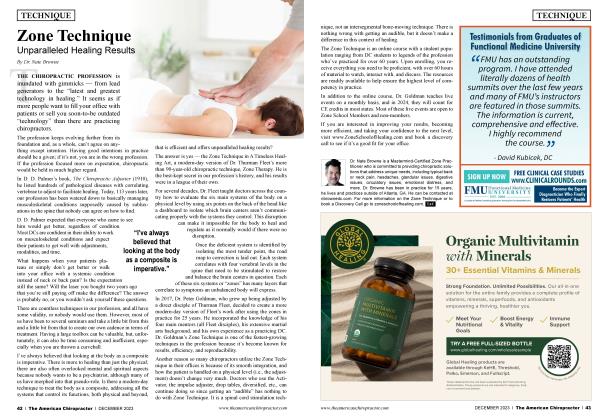
The diagnostic tool is called the global arginine bioavailability ratio (GABR). Researchers found that higher blood serum levels of L-arginine significantly reduced harmful inflammato-
ry biomarkers that proliferated contemporaneously with PTSD symptom severity. “Psychiatric, physical, and biological aspects of posttraumatic stress disorder may be associated with dysfunctions in several cellular processes including nitric oxide production.”5 The study’s conclusions included these helpful findings:
“[T]he GABR value was significantly inversely correlated with markers of inflammation including IL6, CRP, and TNFa.”
“A combination of decreased nitric oxide synthetic capacity and increased proinflammatory cytokines observed in our sample might be especially deleterious as a risk factor for cardiovascular disease and other PTSD-associated somatic disturbances.”
Help your clients improve then health with lifestyle changes that will increase then globally bioavailable L-arginine (supplementation with proven products), increase their endogenous nitric oxide production, improve their endothelial health, and decrease their inflammatory biomarkers and biosystems dysfunctions.
Stanford A. Graham is the senior marketing associate of Sanacor International, Inc., the producer of the most advanced nitric oxide supplement available anywhere, Cardio Miracle. As the market leader, Sanacor’s research is truly groundbreaking, establishing Cardio Miracle’s unprecedented and unmatched position. To learn more about Cardio Miracle, email him at [email protected] or visit www.cardiomiracle.com. Chiropractors can use code TAC for 35% off.
References
1. Mazzolini K, Dzubnar J, Kwak H, Banks K, Mooney C, Tang A, Cohan C, Browder T. An epidemic within the pandemic: the rising tide of trauma during COVID-19. J Surg Res. 2022 Apr;272:139-145. doi: 10.1016/j.jss.2021.11.016. Epub 2021 Dec 9. PMID: 34971837; PMCID: PMC8654586.
2. Luiking YC, PoezeM, Ramsay G, DeutzNE. The role of arginine in infection and sepsis. JPEN JParenter EnteralNutr. 2005 JanFeb;29(l Suppl):S70-4. doi: 10.1177/01486071050290S1S70. PMID: 15709548.
3. 3. Bersani FS, Wolkowitz OM, Lindqvist D, Yehuda R, Flory J, Bierer LM, Makotine I, Abu-Amara D, Coy M, Reus VI, Epel ES, Mamiar C, Mellon SH. Global arginine bioavailability, a marker of nitric oxide synthetic capacity, is decreased in PTSD and correlated with symptom severity and markers of inflammation. BrainBehavImmun. 2016 Feb;52:153-160. doi: 10.1016/j. bbi.2015.10.015. Epub 2015 Oct 26. PMID: 2651503 4. Id.
5. Shao Z, Wang Z, Shrestha K, Thakur A, Borowski AG, Sweet W, Thomas JD, Moravec CS, Hazen SL, Tang WH. Pulmonary hypertension associated with advanced systolic heart failure: dysregulated arginine metabolism and importance of compensatory dimethylarginine dimethylaminohydrolase-1. J Am Coll Cardiol. 2012 Mar 27;59(13): 1150-8. doi: 10.1016/j. jacc.2011.12.022. PMID: 22440215; PMCID: PMC3565538.