Demystifying inherited folate metabolism problems and potential solutions
Demystifying inherited folate metabolism problems and potential solutions
BEFORE DIVING INTO NUTRIGENOMICS, Dr. Lynn Toohey experienced a personal “aha” moment with folate. After analyzing her genetic data, she discovered variants that impaired her ability to convert folic acid into its active form—5-MTHF. In this article, Dr. Toohey shares what that journey revealed and how understanding one’s genes can lead to better, more personalized choices for long-term wellness.
Quite some time ago, before I did a deep dive into the study of how genes and nutrition interact (and how your genetic variants affect your health and diet choices), I had an “aha” moment concerning folate. As it turns out, the “aha” moment was an example of how this interaction specifically works with the B vitamin folate.
I was interested in the concept of how my genetic variants were affecting my health, so I first tested my DNA through Ancestry.com (there are other options). Then, I ran my raw data through a program that analyzes genetic variants and reports on them.
There are many options for analysis programs (please contact the author if you need suggestions), but they should tell you the definitions of the variants and what dietary and lifestyle choices need to be made to optimize the genetic hand you were dealt so that you can work on improving the outcome. For example, if you observe someone with rheumatoid arthritis, their symptoms could very well be what results from combining inherited tendencies with a diet including foods known to initiate/aggravate inflammation.
Take two people, persons A and B, who have the same genetic tendencies. Person A may be symptom-free if they eat a healthy diet full of vitamins, minerals, omega 3 s, phytonutrients, etc., whereas person B may exhibit with a lot of pain and inflammation if they follow an inflammatory diet full of processed foods, alcohol, tobacco, etc.
A good analysis program will tell you what your gene variants are and the kind of environmental applications you can make to optimize your outcome, which brings me to my “aha” moment and how I found out that I was impeded in my ability to change folic acid into active folate.
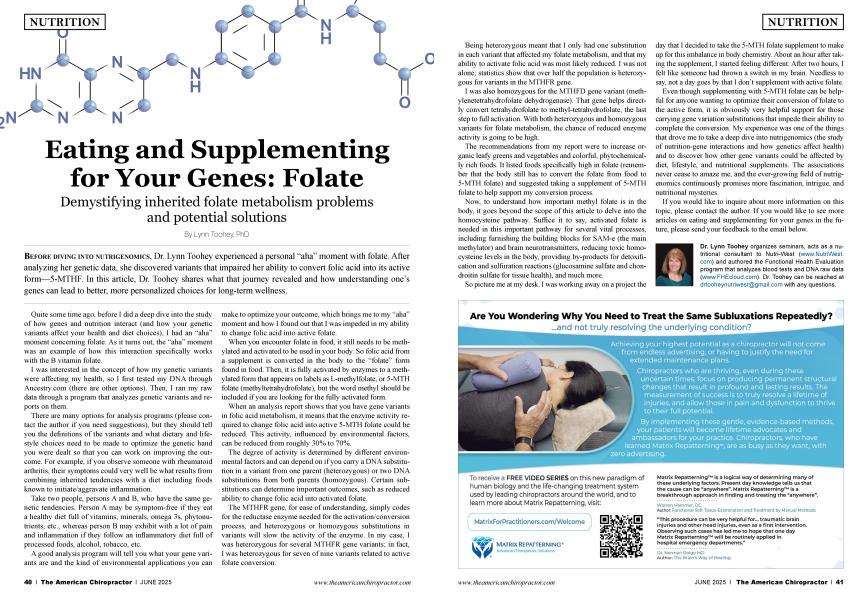
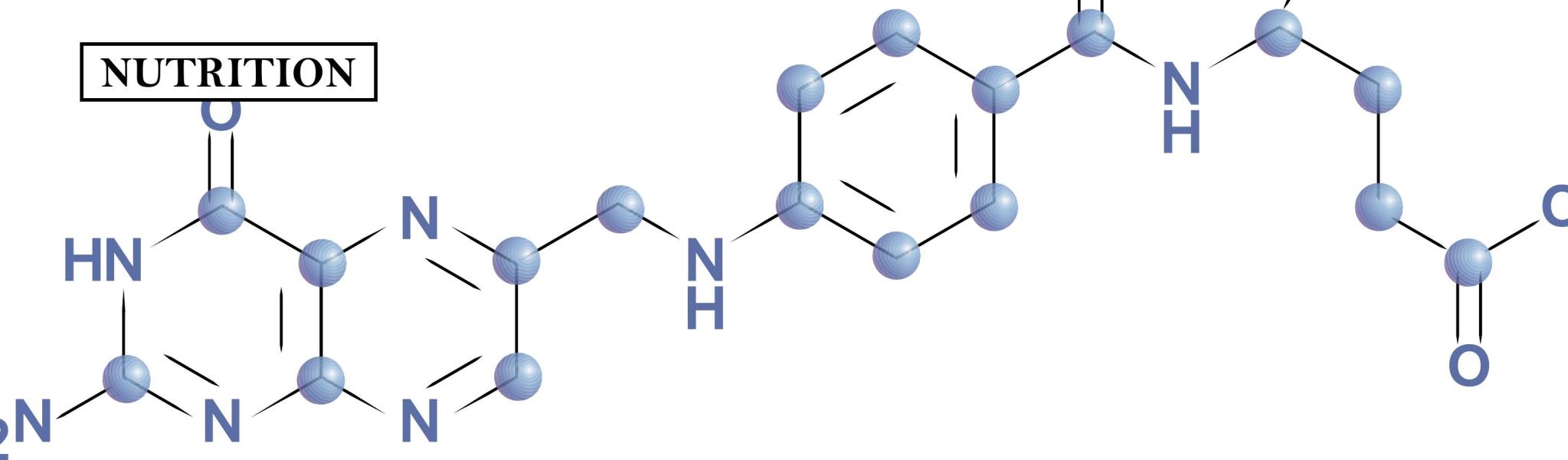
When you encounter folate in food, it still needs to be methylated and activated to be used in your body. So folic acid from a supplement is converted in the body to the “folate” form found in food. Then, it is fully activated by enzymes to a methylated form that appears on labels as L-methylfolate, or 5-MTH folate (methyltetrahydrofolate), but the word methyl should be included if you are looking for the fully activated form.
When an analysis report shows that you have gene variants in folic acid metabolism, it means that the enzyme activity required to change folic acid into active 5-MTH folate could be reduced. This activity, influenced by environmental factors, can be reduced from roughly 30% to 70%.
The degree of activity is determined by different environmental factors and can depend on if you carry a DNA substitution in a variant from one parent (heterozygous) or two DNA substitutions from both parents (homozygous). Certain substitutions can determine important outcomes, such as reduced ability to change folic acid into activated folate.
The MTHFR gene, for ease of understanding, simply codes for the reductase enzyme needed for the activation/conversion process, and heterozygous or homozygous substitutions in variants will slow the activity of the enzyme. In my case, I was heterozygous for several MTHFR gene variants; in fact, I was heterozygous for seven of nine variants related to active folate conversion.
Being heterozygous meant that I only had one substitution in each variant that affected my folate metabolism, and that my ability to activate folic acid was most likely reduced. I was not alone; statistics show that over half the population is heterozygous for variants in the MTHFR gene.
I was also homozygous for the MTHFD gene variant (methylenetetrahydrofolate dehydrogenase). That gene helps directly convert tetrahydrofolate to methyl-tetrahydrofolate, the last step to full activation. With both heterozygous and homozygous variants for folate metabolism, the chance of reduced enzyme activity is going to be high.
The recommendations from my report were to increase organic leafy greens and vegetables and colorful, phytochemicalfy rich foods. It listed foods specifically high in folate (remember that the body still has to convert the folate from food to 5-MTH folate) and suggested taking a supplement of 5-MTH folate to help support my conversion process.
Now, to understand how important methyl folate is in the body, it goes beyond the scope of this article to delve into the homocysteine pathway. Suffice it to say, activated folate is needed in this important pathway for several vital processes, including furnishing the building blocks for SAM-e (the main methylator) and brain neurotransmitters, reducing toxic homocysteine levels in the body, providing by-products for detoxification and sulfuration reactions (glucosamine sulfate and chondroitin sulfate for tissue health), and much more.
So picture me at my desk. I was working away on a project the day that I decided to take the 5-MTH folate supplement to make up for this imbalance in body chemistry. About an hour after taking the supplement, I started feeling different. After two hours, I felt like someone had thrown a switch in my brain. Needless to say, not a day goes by that I don’t supplement with active folate.
Even though supplementing with 5-MTH folate can be helpful for anyone wanting to optimize their conversion of folate to the active form, it is obviously very helpful support for those carrying gene variation substitutions that impede their ability to complete the conversion. My experience was one of the things that drove me to take a deep dive into nutrigenomics (the study of nutrition-gene interactions and how genetics affect health) and to discover how other gene variants could be affected by diet, lifestyle, and nutritional supplements. The associations never cease to amaze me, and the ever-growing field of nutrigenomics continuously promises more fascination, intrigue, and nutritional mysteries.
If you would like to inquire about more information on this topic, please contact the author. If you would like to see more articles on eating and supplementing for your genes in the future, please send your feedback to the email below.

Dr. Lynn Toohey organizes seminars, acts as a nutritional consultant to Nutri-West (www. Nutri West, com) and authored the Functional Health Evaluation program that analyzes blood tests and DNA raw data (www.FHEcloud.com). Dr. Toohey can be reached at [email protected] with any questions.