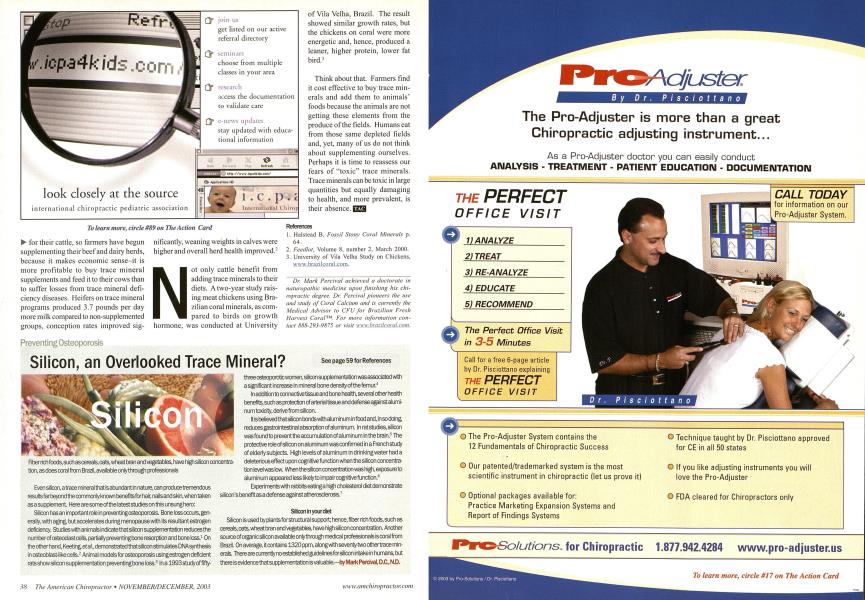
See page 59 for References Even silicon, a trace mineral that is abundant in nature, can produce tremendous results farbeyond the commonly known benefits for hair, nailsand skin, when taken asa supplement Here are some of the latest studies on this unsung hero: Silicon has an important role in preventingosteoporosis. Bone loss occurs, generally, with aging, but accelerates during menopause with its resultant estrogen deficiency. Studies with animalsindicatethat silicon supplementation reduces the number of osteoclast cells, partially preventing bone resorptionand bone loss.1 On the other hand, Keeting, eta/., demonstrated that silicon stimulates DNAsynthesis in osteoblasWike cells.2 Animal models for osteoporosis using estrogen deficient rats show silicon supplementation preventing bone loss.3 In a 1993 study of fifty- three osteoporotic women, silicon supplementation was associatea wren a significant increase in mineral bone density of the femur.4 In addition to connective tissue and bone health, several other health benefits, such as protection of arterialtissueand defense against aluminum toxicity, derive from silicon. It is believed that silicon bonds with aluminum in food and, in so doing, reduces gastrointestinal absorption of aluminum. In rat studies, silicon was found to preventtheaccumulation of aluminum in the brain.5 The protective role of silicon on aluminum was confirmed in a French study of elderly subjects. High levels of aluminum in drinking water had a deleterious effect upon cognitive function when the silicon concentration level was low. When the silicon concentration was high, exposure to aluminum appeared less likelyto impair cognitive function.6 Experiments with rabbits eatinga high cholesterol dietdemonstrate silicon's benefit as a defense against atherosclerosis.7 Silicon inyourdiet Silicon is used by plants for structural support; hence, fiber rich foods, such as cereals, oats, wheat bran and vegetables, have high silicon concentration. Another source of organic silicon available onlythrough medical professionals is coral from Brazil. On average, it contains 1320 ppm, along with seventy-two othertrace minerals. There are currently noestablished guidelinesfor silicon intake in humans, but there is evidence that supplementation is valuable- Fiber rich foods, such as cereals, oats, wheat bran and vegetables, have high silicon concentration, as does coral from Brazil, available only through professionals