(And Why That’s Exactly the Point)
(And Why That’s Exactly the Point)

“I don’t like the word ‘franchise’ because of the instant word associations that come up for many people. I much prefer to think of it as a ‘win-win partnership’.”
I WAS AT A CONFERENCE LAST YEAR WHEN THE GUY SITTING NEXT TO ME — nice enough, solid adjustment skills, the kind of chiropractor who got into this because he genuinely wanted to help people — heard the word “franchise” from the stage. He physically recoiled as if someone had suggested he sell his practice and open a Subway.
“I didn’t spend four years at chiropractic college to follow someone else’s script,” he muttered into his coffee.
I understood the reaction because I’d had the same one once. I was dead wrong.
Here’s what nobody tells you when you hang your shingle. You didn’t become a chiropractor. You actually became a small business owner, an HR department, a marketing director, a billing specialist, a compliance officer, and — on particularly bad Tuesdays — a plumber.
Most of us are terrible with at least four of those things.
The Bureau of Labor Statistics tells us that about 20% of small businesses fail within their first year, and nearly half don’t make it past five. Chiropractic practices aren’t immune.
And the ones that close? It’s rarely because the doctor couldn’t adjust. It’s because they couldn’t keep up with everything else.
The harsh reality is that the adjusting table is the easy part. It’s the other 47 hats that’ll bury you.
As the writer Annie Dillard put it, “How we spend our days is, of course, how we spend our lives.” If you’re spending yours arguing with insurance companies and Googling “how to run Facebook ads,” that’s not a practice. That’s a hostage situation.
I mean this with love. Most chiropractors I know are brilliant with their hands and utterly hopeless with a marketing budget. They’ll spend $3,000 on a Yellow Pages ad (in 2025, God help them) or throw money at a website that looks as if it were built during the Clinton administration and wonder why new patients aren’t walking through the door.
Marketing a chiropractic practice is a discipline. It requires tested messaging, consistent follow-up, community outreach strategies, review management, social media that doesn’t make people cringe, and — increasingly — SEO that keeps you visible when someone in your town types “back pain near me” at 2:00 a.m. on their mobile device.
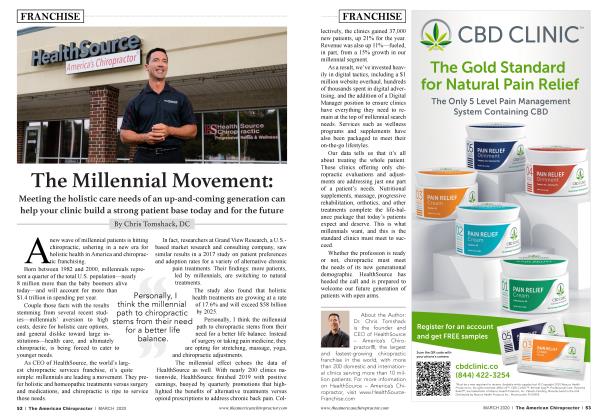
I don’t like the word “franchise” because of the instant word associations that come up for many people. I much prefer to think of it as a “win-win partnership.” Semantics aside, the truth is a franchise model gives you a marketing playbook that’s already been tested across hundreds of locations.
You’re not guessing. You’re not reinventing. You’re running a system that already works and spending your free hours doing the thing you trained for.
Is it glamorous? No. Is it effective? Absurdly so.
I spent my first three years in practice trying to figure out marketing on my own. I’d have been better off setting that money on fire (at least I would’ve kept warm in the Ohio winters).
There’s a particular kind of loneliness that comes with running a solo practice. You can’t vent to your staff about the staff. You can’t ask a colleague for advice because your nearest colleague is your competitor. Your spouse — bless them — stopped pretending to understand “accounts receivable” about six months in.
Studies from the Journal of Occupational Health Psychology consistently link professional isolation to higher rates of burnout. I know you know what I mean when I lovingly say that chiropractic, with its solo-practice culture, is a breeding ground for it.
A franchise network gives you something that’s surprisingly hard to find in our industry: helpful peers. People running the same kind of practice, facing the same problems, and sharing what’s working. It’s a mastermind group you didn’t have to organize yourself.
Think of it like this: every solo practitioner builds a boat from scratch in their garage. A franchise hands you a boat that floats, a map, and a radio to call someone when you hit rough water. You still have to sail the thing, but you’re not alone in the ocean — huge difference.
This is where the flawed belief that “franchise = loss of freedom” argument falls apart completely. When some people hear “franchise,” they picture a corporate overlord dictating exactly how long to spend with each patient and what color the waiting room chairs should be. And yes, if you join a bad franchise, that might be your experience.
However, a well-designed franchise system doesn’t tell you how to be a chiropractor. It encourages you to adjust patients in your own unique style, while simultaneously handling all the time-consuming stuff that has nothing to do with being a chiropractor — billing workflows, patient scheduling protocols, staff training programs, vendor negotiations, compliance updates, and so on.
It’s like the difference between a chef who has a prep team and a chef who has to grow the tomatoes, milk the cow, chum the butter, and cook the meal. Both can make great food, but one of them is going to bed at a reasonable hour with a lot less stress and more free time to spend with their family.
The irony is beautiful: the chiropractors who are most fiercely independent are often the ones with the least freedom. They’re chained to admin tasks, payroll nightmares, and a never-ending to-do list that has nothing to do with patient care.
Freedom isn’t doing everything yourself. Freedom is doing the right things yourself.
I get it. You built your practice. Your name is on the door. Your personality is in the walls. The idea of “becoming a franchise” might feel like trading your identity for a uniform.
But ask yourself an honest question: How much of your current “identity” is genuinely you, and how much of it is chaos you’ve gotten used to?
That filing system you rigged in 2019 — is that your identity? The way you handle patient recalls with a sticky note and a prayer — is that your brand? The fact that you personally stay until 8:00 p.m. doing bookkeeping because you can’t afford a full-time admin — is that freedom?
A good franchise doesn’t erase who you are. It simply removes the noise so who you are can show up.
The best chiropractors I’ve ever met inside franchise models are more themselves, not less. They’re spending their time and energy on patient relationships, technique, community involvement — the stuff that made them fall in love with this profession in the first place.
As Warren Buffett once said, “The difference between successful people and really successful people is that really successful people say no to almost everything.” A franchise says “no” to the operational clutter for you.
Here’s the quiet tragedy of the solo practitioner: everything they’ve figured out dies with their retirement.
Every workflow, every patient communication trick, every scheduling insight they’ve developed over 20 years is all stored in one place — their brain. When they’re done, it’s gone.
If you ever want to open a second location, bring on an associate, or — heaven forbid — take a two-week holiday without the whole operation catching fire, you need systems that exist outside of you.
Franchise models force this discipline from day one. Everything is documented. Everything is repeatable. Everything can run without you standing in the middle of it, holding the whole thing together with your bare hands and a Red Bull.
That’s not a limitation. That’s a legacy.
The chiropractor who can step away for a week and come back to a practice that’s still running smoothly isn’t lazy. They’re smart, and they built a practice that’s worth something — to a buyer, to an associate, or to themselves on a Tuesday morning when they fancy sleeping in.
“The irony is beautiful: the chiropractors who are most fiercely independent are often the ones with the least freedom.”
The single biggest takeaway is this: a chiropractic franchise isn’t the opposite of independence. It’s the infrastructure of independence. It’s what lets you practice the way you always imagined — focused on patients, free from operational quicksand, and backed by people who’ve already solved the problems you’re still Googling.
If you’ve been dismissing the franchise model because it feels like “selling out,” I’d encourage you to do one thing: talk to a chiropractor who’s inside one. Not the marketing department. Not the brochure. An actual DC who made the switch. Ask them if they feel less like a chiropractor.
I’ll bet you a spinal model and a parking lot full of anatomical posters that the answer surprises you.
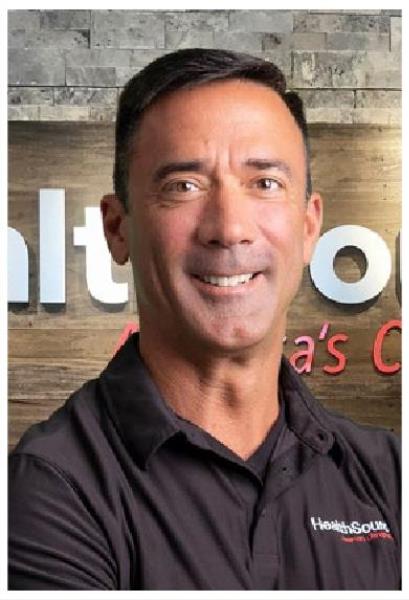
Dr. Chris Tomshack is founder and CEO of Healthsource Chiropractic, America’s leading network of premium disc and spine centers. Contact him at [email protected] or 440-934-5858. Download the Premium Spine & Disc Practice Blueprint at: www.TheChiroBlueprint.com