Practice Coaching
IN BRIEF
PRACTICE MANAGEMENT
The Engine That Turns Learning into Practice Growth
Daniele G. Lattanzi
EDUCATION IS ABUNDANT IN CHIROPRACTIC: books, seminars, online courses, and certification tracks.
Most of that education focuses on clinical skills, but one challenge persists across clinics of every size — the skills required to manage and grow the practice.
While online courses and seminars can provide theoretical information about practice management, knowing what to do is not the same as doing it consistently, well, and in ways that drive results.
That’s the value of practice coaching. A structured, personalized approach helps chiropractors implement, refine, and sustain the changes they want to see in their practices.
What Practice Coaching Really Is
At its core, practice coaching is more than advice or inspiration. It is guided implementation that is rooted in accountability, measurement, and continual refinement.
Coaches aren’t consultants who deliver a plan and walk away. Instead, they:
• Help translate training into real workflows.
• Support clinicians and teams as they adopt new habits.
• Measure outcomes and adjust tactics based on results.
• Build repeatable systems that improve growth over time.
• This shift from learning to doing is what separates practices that plateau from those that thrive.
• Why Coaching Matters Now More Than Ever
• Chiropractic practice is not static. Market demands, patient expectations, and competition are constantly evolving.
To succeed today, clinics need to continually improve key performance areas, such as:
• Patient acquisition and compliance — Ensuring patients follow care plans and return regularly improves outcomes and practice stability. Patient compliance is recognized as a foundational element of care success and practice performance.
• Patient communication — Frequent, meaningful contact keeps patients engaged and supports longterm adherence.
• Team alignment and culture — Coaching can help unify staff around clear goals, shared values, and measurable performance indicators.
Educational content provides the “what”; practice coaching delivers the “how,” ensuring that strategies aren’t just learned but also internalized and executed.
How Coaching Bridges the Implementation Gap
Professional development can introduce new ideas, but implementation depends on behavior change within teams that do things differently. Practice coaching accelerates that process by focusing on three essential elements:
1. Accountability: Knowing that someone will follow up on commitments and progress dramatically increases execution. Coaches help keep initiatives alive long after the training ends.
2. Personalization: Every practice has unique strengths, patient populations, and operational challenges. Coaching helps tailor strategies rather than apply one-size-fits-all solutions.
3. Measurement: Tracking real outcomes — such as retention, treatment acceptance, visit frequency, or revenue stability — turns abstract goals into concrete benchmarks. This data-informed mindset enables practices to iterate and improve continuously.
Behind the Numbers: A Real Student Success Story
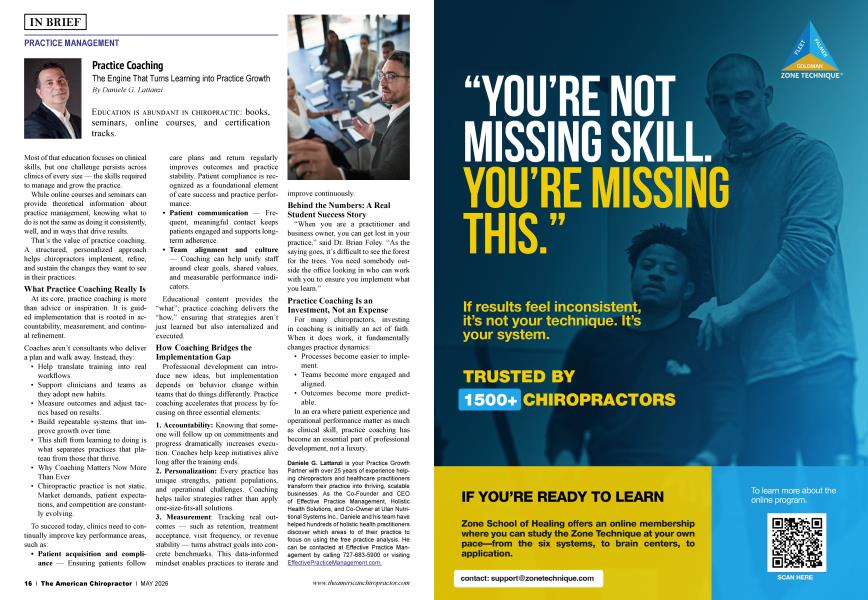
“When you are a practitioner and business owner, you can get lost in your practice,” said Dr. Brian Foley. “As the saying goes, it’s difficult to see the forest for the trees. You need somebody outside the office looking in who can work with you to ensure you implement what you learn.”
Practice Coaching Is an Investment, Not an Expense
For many chiropractors, investing in coaching is initially an act of faith. When it does work, it fundamentally changes practice dynamics:
• Processes become easier to implement.
• Teams become more engaged and aligned.
• Outcomes become more predictable.
In an era where patient experience and operational performance matter as much as clinical skill, practice coaching has become an essential part of professional development, not a luxury.
Daniele G. Lattanzi is your Practice Growth Partner with over 25 years of experience helping chiropractors and healthcare practitioners transform their practice into thriving, scalable businesses. As the Co-Founder and CEO of Effective Practice Management, Holistic Health Solutions, and Co-Owner at Ulan Nutritional Systems Inc., Daniele and his team have helped hundreds of holistic health practitioners discover which areas to of their practice to focus on using the free practice analysis. He can be contacted at Effective Practice Management by calling 727-683-5900 or visiting EffectivePracticeManagement.com.