In an interview with The American Chiropractor, Dr. Joe Busch and Jaclyn Touzard (TAC) are joined by Dr. Jane Brewer (JB), upper cervical chiropractor at Precision Chiropractic in Colorado, and Claude Royster (CR), SVP & General Manager of Wellness at CareCredit (a Synchrony solution) to explore how wellness trends are reshaping chiropractic practices, the importance of preventive care, and how flexible financing solutions such as the CareCredit credit card offer patients a way to manage cost to maintain regular visits.
JB: Absolutely. I’m an upper cervical specialist, which means I focus on the junction of the head and the neck to restore structural and neurological balance in that area. It’s a small but vital region that plays a huge role in overall balance, postural control, movement, and blood flow.
We often think of foundations at the bottom, but in the spine, if the head isn’t aligned properly on the neck, everything below is compromised. This approach naturally guides patients toward wellness care because, if done right, they need less intervention over time.
As healing occurs and stability improves, function enhances, and patients feel better. Once they experience that, they want to maintain it with minimal effort, shifting from intensive corrections to preventive maintenance, and that’s where options like CareCredit become invaluable, offering them a way to finance those ongoing visits.
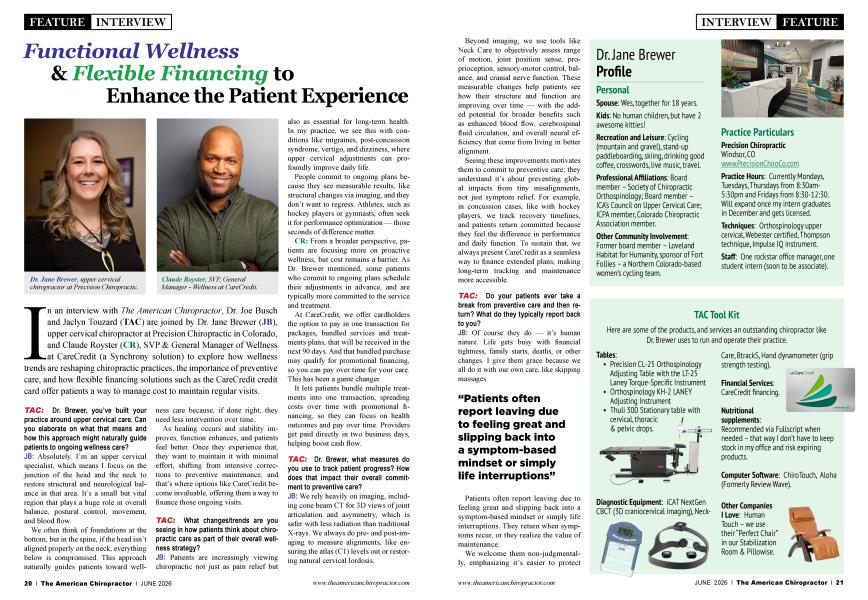
 Claude Royster, SVP, General Manager - Wellness at CareCredit.
JB: Patients are increasingly viewing chiropractic not just as pain relief but also as essential for long-term health. In my practice, we see this with conditions like migraines, post-concussion syndrome, vertigo, and dizziness, where upper cervical adjustments can profoundly improve daily life.
People commit to ongoing plans because they see measurable results, like structural changes via imaging, and they don’t want to regress. Athletes, such as hockey players or gymnasts, often seek it for performance optimization — those seconds of difference matter.
CR: From a broader perspective, patients are focusing more on proactive wellness, but cost remains a barrier. As Dr. Brewer mentioned, some patients who commit to ongoing plans schedule their adjustments in advance, and are typically more committed to the service and treatment.
At CareCredit, we offer cardholders the option to pay in one transaction for packages, bundled services and treatments plans, that will be received in the next 90 days. And that bundled purchase may qualify for promotional financing, so you can pay over time for your care. This has been a game changer.
It lets patients bundle multiple treatments into one transaction, spreading costs over time with promotional financing, so they can focus on health outcomes and pay over time. Providers get paid directly in two business days, helping boost cash flow.
JB: We rely heavily on imaging, including cone beam CT for 3D views of joint articulation and asymmetry, which is safer with less radiation than traditional X-rays. We always do preand post-imaging to measure alignments, like ensuring the atlas (Cl) levels out or restoring natural cervical lordosis.
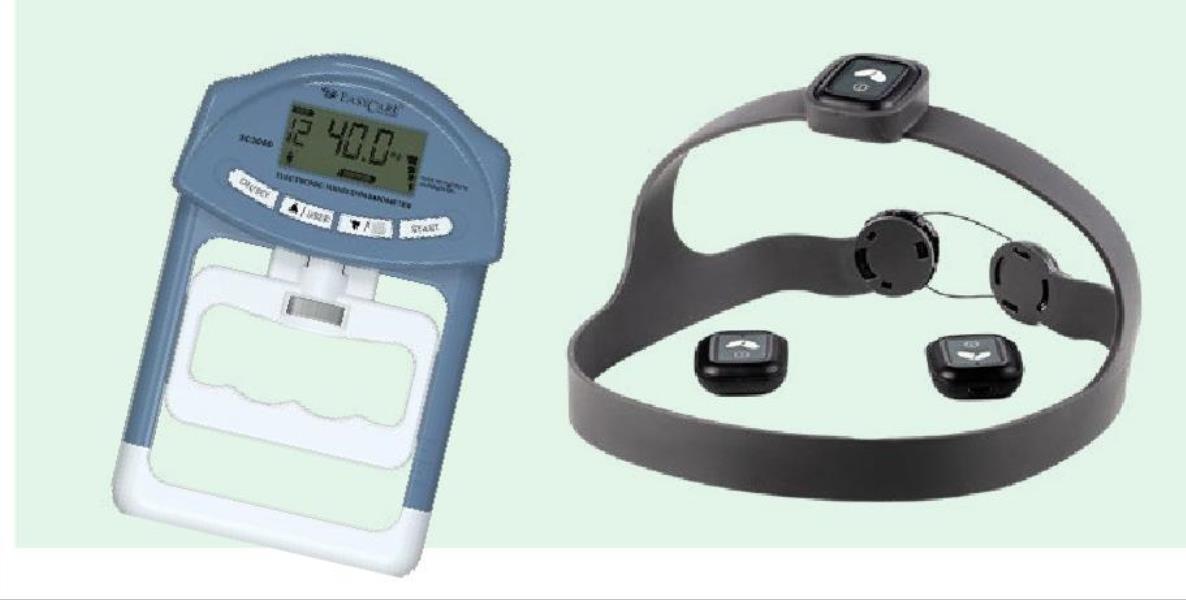
Beyond imaging, we use tools like Neck Care to objectively assess range of motion, joint position sense, proprioception, sensory-motor control, balance, and cranial nerve function. These measurable changes help patients see how their structure and function are improving over time — with the added potential for broader benefits such as enhanced blood flow, cerebrospinal fluid circulation, and overall neural efficiency that come from living in better alignment.
Seeing these improvements motivates them to commit to preventive care; they understand it’s about preventing global impacts from tiny misalignments, not just symptom relief. For example, in concussion cases, like with hockey players, we track recovery timelines, and patients return committed because they feel the difference in performance and daily function. To sustain that, we always present CareCredit as a seamless way to finance extended plans, making long-term tracking and maintenance more accessible.
JB: Of course they do — it’s human nature. Life gets busy with financial tightness, family starts, deaths, or other changes. I give them grace because we all do it with our own care, like skipping massages.
“Patients often report leaving due to feeling great and slipping back into a symptom-based mindset or simply life interruptions”
Patients often report leaving due to feeling great and slipping back into a symptom-based mindset or simply life interruptions. They return when symptoms recur, or they realize the value of maintenance.
We welcome them non-judgmentally, emphasizing it’s easier to protect gains than rebuild. I even tell them up front: if you need a break, just say so — the door’s always open. This builds long-term relationships and turns pauses into learning experiences about why preventive care matters, especially when we remind them of our refund policy for unused prepaid services.
 Dr. Jane Brewer, upper cervical chiropractor at Precision Chiropractic.
Here are some of the products, and services an outstanding chiropractor like Dr. Brewer uses to run and operate their practice.
Tables:
• Precision CL-25 Orthospinology Adjusting Table with the LT-25 Laney Torque-Specific Instrument
• Orthospinology KH-2 LANEY Adjusting Instrument
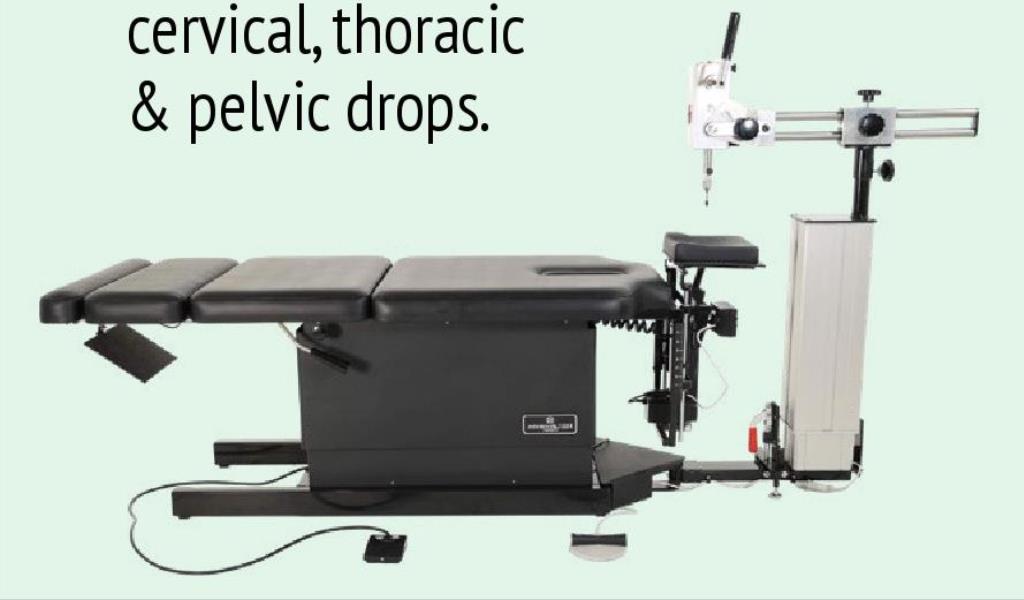
• Thuli 500 Stationary table with cervical, thoracic / & pelvic drops.

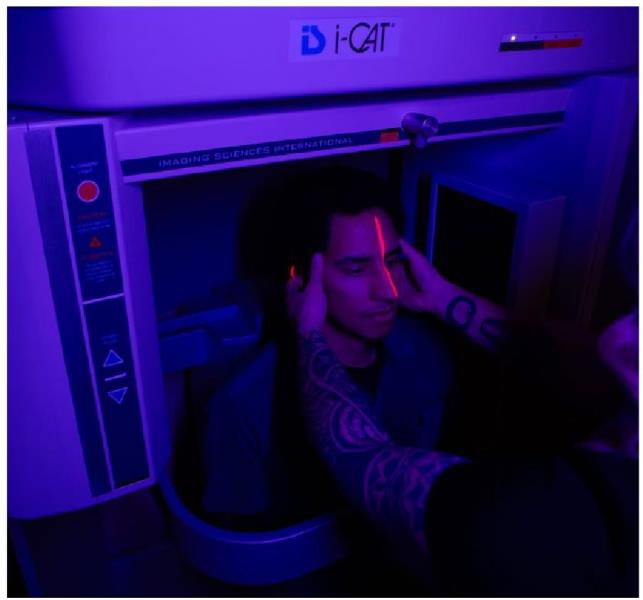 Dr. Brewer using the iCAT NextGen CBCT for 3D craniocervical imaging.
JB: Common objections are: Can you help me? How much will it cost? How long will it take? We’re transparent from the start with complimentary consultations, disclosing all fees and options like CareCredit. If I can’t help, I say so immediately.
We address the instant-gratification mindset by explaining issues developed over time and require consistent effort to correct underlying causes, not just Band-Aids. Using metaphors — like tuning a guitar that gets used daily — helps them see preventive care as an investment against wear and tear, especially in active lifestyles like Colorado’s mountains.
Education on immeasurable benefits, like preventing future issues, resonates. For unaware patients, we start with what they’re signing up for and build from there, always highlighting how CareCredit’s flexible financing helps turn that investment into manageable monthly payments.
CR: Cost is a big inhibitor; routine care adds up, which can lead to postponement. In Kantar’s 2023 Download on Health and Wellbeing Research, 46% of consumers surveyed said they would visit more if it cost less. According to Synchrony’s Healthcare Journey Research Consumers and Providers study, 53% of consumers surveyed said they had delayed health or wellness care due to out-of-pocket expenses.1
CareCredit addresses this as a winwin, offering a way to make monthly payments so patients focus on outcomes, and helps providers increase revenue through committed care. With our option to pre-pay for packages to be used within 90 days, patients can lock in a treatment plan and finance the cost that may derail preventive strategies.
CR: Cost is the primary inhibitor, even when benefits are clear. Without payment options, patients may postpone, risking worsened symptoms.
Our research shows three out of four patients would seek more services if they had ways to pay, per the 2023 Synchrony Healthcare Journey Research Consumers and Providers Study, and 59% feel providers’ options are limited. Many are unaware of financing that could help manage expenses. Delayed care can affect health outcomes and practices’ ability to serve optimally.
CareCredit addresses this by offering patients promotional financing to spread the cost of preventive packages over time. It supports chiropractic’s multi-visit model, helping patients accept recommended care.
JB: Clinically, I see patients delay due to not understanding the progressive nature of issues or financial hurdles, but transparency and options like CareCredit help make care accessible, turning potential drop-offs into sustained wellness journeys.
 Presenting scans to a patient.
JB: We’re upfront in complimentary consultations, disclosing all fees to avoid surprises. My practice isn’t in-network with insurance, but we provide documentation for reimbursement if patients have out-of-network benefits.
We always offer CareCredit as an option. This transparency empowers informed choices, focusing on what’s best for them while easing cost concerns that may cloud the journey. It helps build trust and make preventive care feasible, as patients see how prepaying via CareCredit secures their plan without immediate outlay.
CR: Transparency is key. In our Healthcare Journey Research Consumers and Providers1 report, it shows 55% of patients want cost discussions before care, and 61% prefer learning payment methods from providers. It affects decisions positively when done right, especially with CareCredit’s onboarding training for clinic staff, ensuring compliant, clear explanations of how financing supports bundled preventive services to be received within 90 days.
CR: Today, there’s more consumerism. Patients research costs online, weighing in-network versus out-of-network. They seek flexible options to fit budgets.
Providers can help by educating on financing during conversations, using tools like our Fair Patient Financing Principles webpage with a link to a payment calculator. CareCredit supports this with promotional financing for qualifying purchases; paid directly to providers in two business days.
Our 2024 data shows 45% of cardholders returned to the same provider within the same year, building loyalty. For preventive chiropractic, this suggests that when patients finance maintenance bundles, they are more likely to stay committed to ongoing care— helping reduce no-shows and supporting practice stability.
JB: In practice, I focus on serving the patient, letting staff handle finances, but offering options empowers choices, particularly the ability to bundle treatment packages with CareCredit such as ongoing upper cervical stability.
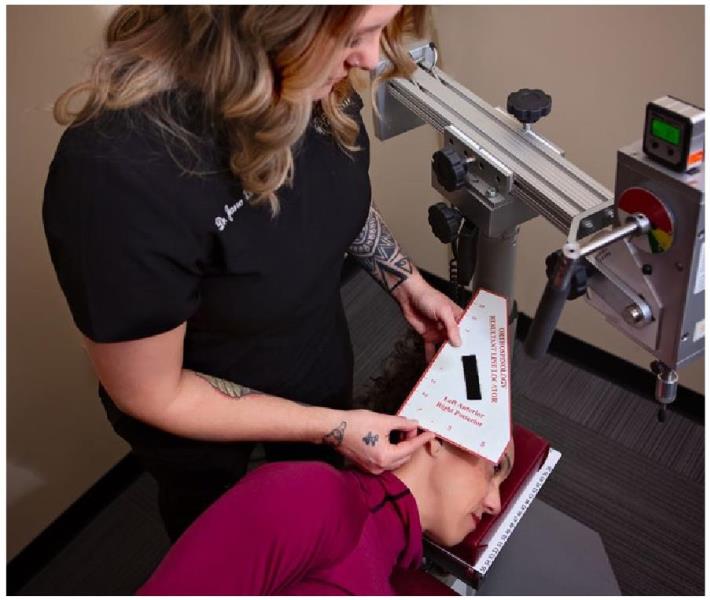 Dr. Brewer using the Orthospinology Resultant Line Locator to find the precise vector (direction and force) needed for low-force adjustments, to the atlas vertebra (C1).
JB: Education is key; framing it as an investment with empirical evidence like imaging shows. We use metaphors (e.g., thinking of your body like a guitar: the more you use it, the more it needs tuning) and emphasize feeling better leads to wanting maintenance.
In consultations, we address questions proactively, showing how preventive care prevents regression. For ongoing patients feeling great, we remind them of their “why” to avoid symptom-based thinking and tie it to CareCredit’s ease for sustaining that investment.
JB: Starting right out of school with upper cervical in Colorado, where no one else practiced it, taught me resilience. I tightened my bootstraps and made it happen.
Key lessons: Focus on serving patients clinically while delegating finances to staff. Common challenges include lacking business training, but building trust through transparency sustains growth. Advice: Be upfront, empower patients, and use tools like CareCredit. Onboarding with partners ensures compliance and effective offerings, especially for prepaid plans that stabilize revenue.
JB: Post-COVID, there’s emphasis on building health foundations — B.J. Palmer’s idea of “cumulative constructive survival value” like banking health for rainy days. Innovations like advanced imaging will evolve care models. Practices should prepare by educating on proactive investments, as health is wealth.
CR: Payment solutions like CareCredit will support preventive models. Multisource financing functionality is available and helps approve more patients which supports repeat visits and loyalty. Practices can prepare by integrating flexible options and visiting carecredit, com/providers for resources. Our evolving tools like prepayment for bundled services to be received in 90 days helps make wellness financing as routine as the care itself.
To learn more about CareCredit and how it can help you do what you love visit carecredit.com/providers for financing info.
References
‘Healthcare Journey Research Consumers and Providers report, Synchrony, 2023. (CareCredit is a Synchrony solution.)
NEW PODCAST EPISODE
Find the podcast version of this interview at www.Tic-Talk.net,