How Lasers and Functional Medicine/Neurology Saved My Wife’s Life
How Lasers and Functional Medicine/Neurology Saved My Wife’s Life
IN 2011, MY LIFE CHANGED OVERNIGHT when my wife turned to me and said, “You have to be prepared that I may not make it.” She truly believed she was going to die.
When I started taking functional medicine and neurology courses from my long-time friend, Dr. Datis Kharrazian, in 2009, I never imagined they would be vital in saving the most important person in my life. However, without that knowledge — combined with my high-energy, nonthermal lasers — I am certain I would have lost her.
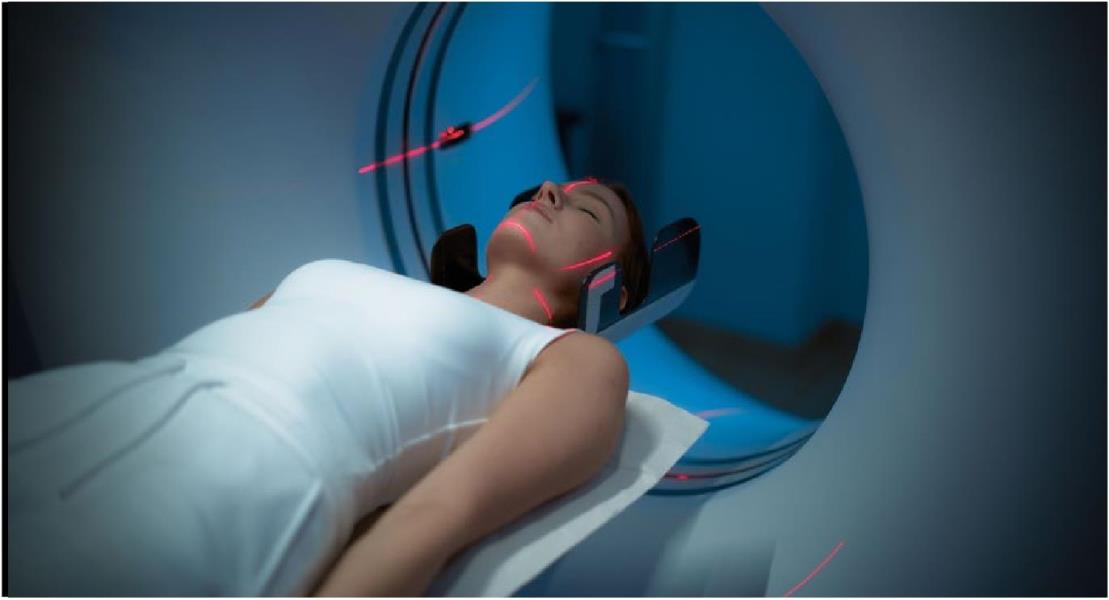
My wife went for a routine CT scan with iodine contrast, and it triggered a severe autoimmune reaction that nearly caused a stroke and left her practically bedridden. Dysautonomia was so intense that it led to her uttering those chilling words to me. When none of the experts at Loma Linda, Harbor UCLA, or other specialists could make sense of her symptoms, hopelessness set in.
Thankfully, I had access to Dr. Kharrazian. He was like ObiWan Kenobi to me, and I was calling out like Princess Leia, “Help me, Obi-Wan Kenobi. You’re my only hope.”
As I described what had happened, he told me it was actually pretty simple and was surprised none of the experts knew this: the iodine contrast likely triggered a massive thyroid storm, probably because of preexisting, undiagnosed TPO antibodies — a known but rarely screened-for reaction.
This autoimmune attack caused a massive release of thyroid hormones, elevating blood pressure and heart rate to stroke levels. Most clinicians overlook that TPO antibodies can also target the cerebellum, leading to ongoing neurological damage, which had confounded the other doctors.
I was relieved to have an explanation but was devastated by the prognosis, especially knowing this could be progressive. I’ve never been one to give up, so I asked Dr. Kharrazian a question that would change my wife’s health and my career.
“Do you think laser might help her brain?”
I had been using lasers for seven years, mainly for musculoskeletal issues, with some remarkable results. In one case, a patient avoided leg amputation from CRPS thanks to laser and chiropractic care, but at that time, I had not focused heavily on neurological applications.
Dr. Kharrazian wasn’t sure but promised to look into it. He has an additional PhD in clinical research from Harvard, so he is very thorough. He returned with several studies showing how laser therapy could not only help but potentially reverse what was happening to her brain.
He told me, “You need to laser the heck out of her brain! I had no idea about all this research on lasers and the brain, but it’s impressive!”
That was the window I needed. I began devouring every study I could find and was stunned to see research showing low-level laser benefits not just for the brain but also the thyroid, 1 blood glucose,2 autoimmune modulation,3 cytokine reduction, neurogenesis, cardiac conditions,4 and more.
Note: There are currently no FDA clearances for any of these conditions. These are strictly off-label uses and may not be allowed in some states, so check with your board before implementation.
I created protocols where my wife performed targeted activities for her weak neurological functions while I applied laser to her brain. Progress was finally happening. One year after being nearly bedridden, she was playing tennis with me and getting back to normal.
In 2017, Dr. Kharrazian asked me to be the first person to lecture at the International Association of Functional Neurology and Rehabilitation conference on lasers for TBI and other brain issues. It was an honor to introduce the concept to such an elite audience.
After my lecture, I spoke with Dr. Robert Melillo, well known for his work with children with autism. I asked if he was aware of research on lasers and autism, particularly the quadruple-blind Erchonia study5 submitted to the FDA. He hadn’t yet heard of it but was intrigued by the possibilities.
That was eight years ago, and even though today many more chiropractors are integrating functional medicine/neurology and lasers into their offices (along with traditional chiropractic for best results), most practitioners don’t fully understand the power of non-thermal, visible lasers for these cases because they still see it as simply pain relief.
They know even less about high-energy violet and green lasers, other than the marketing myths that negate their benefits, which is very unfortunate because they have great benefits for these cases in particular.
For decades, low-level laser therapy (LLLT) was pigeonholed as a pain-management tool. Recent peer-reviewed studies, including my own 2023 trial on green and violet lasers for chronic neck and shoulder pain, reveal that visible high photon-energy lasers (405-700 mn) are a core mitochondrial therapy that also has functional medicine and neurology applications.
The research now extends far beyond musculoskeletal pain into systemic and neurovascular conditions, including autoimmune thyroiditis, diabetes, gut disorders, autism, cardiovascular disease, and even carotid artery stenosis. They are all linked by a common denominator — mitochondrial dysfunction.
The electron transport chain (ETC) has four major complexes, each responsive to different wavelengths:
• Complex I and II — Maximally absorb violet (-405 nm) and blue light
• Complex III — Best stimulated by green (-525 nm)
• Complex IV — Responds to red (-640 nm) and some infrared
Most devices in our profession, especially IR-only LEDs and lasers, only target complex IV. That leaves patients with impaired and underserved complexes I, II, and III, particularly those with chronic infl aimnation, neurological injury, or autoimmune disease.
Some of the most common medications Americans are prescribed, such as opioids, NSAIDS, heart meds, psych meds, and diabetes meds, can disrupt optimal function at these complexes. Food additives, such as artificial colors and sweeteners, hydrogenated oils, alcohol, pesticides on foods, COVID spike proteins, and more can also impair mitochondria functioning.
High photon-energy visible lasers deliver the spectrum needed for full ETC coverage. Collimation is critical, as shown by Moskvin, Tun6r, and Hode, because only a coherent, high-energy beam can trigger coherent biophotons to be released by the mitochondria.6
After high-energy wavelengths cause electrons to become excited, they will release ultraweak biophotons when they fall back down that will travel through microtubules and myelin sheaths like a fiber optic network. These biophotons remain coherent in these structures, contrary to older theories that they lose coherence quickly.
Biophotons carry “quibits” of data and will end up in light receptors in the brain, where they will process the information. Basically, the cells will “talk” in laser-like coherent impulses, and these biophotons even impact consciousness.7
Lasers with wavelengths greater than 750 mn do not have enough electron voltage to trigger these biophotons, which is why adding violet and green can enhance your results with these complex cases and your musculoskeletal cases. Because LEDs are noncoherent, their photons get filtered out as background “noise” instead of information.
1. Chronic Pain (GVL Study)
Our 2023 randomized, double-blind, placebo-controlled trial showed that the Erchonia GVL (405 nm + 525 mn) outperformed longer wavelengths and LEDs for chronic neck and shoulder pain. Improvement continued for 48 hours post-session, indicating a neurochemical and mitochondrial reset rather than temporary analgesia.
2. Autism and Neurology
The 2018 Machado study on collimated red laser (640 mn) demonstrated QEEG changes and improved connectivity in autism spectrum disorder. Clinically, combining FX 405 (violet + red) with GVL (violet + green) provides full ETC stimulation, supporting focus, sensory integration, and emotional regulation. Another Machado study showed that vagal application with red and violet had positive changes on QEEG.
3. Cardiovascular and Vascular Health (Carotid Artery Stenosis)
A 2024 case series using the Erchonia EVRL (405 mn violet + 635 nm red) on 30 patients with carotid artery stenosis showed:
• 3.8% mean reduction in stenosis over 12 weeks (p 0.0001)
• Significant increase in plaque stability (GSM +34.07, p 0.0001)
• Benefits independent of gender, smoking, or diabetes status Mechanisms included targeted complex I (violet) and complex IV (red) stimulation, reduced ROS, increased ATP, nitric oxide release, VEGF-mediated angiogenesis, and improved lipid metabolism within plaques. This is the first published human study using visible-spectrum dual-wavelength lasers for vascular plaque stabilization.
4. Autoimmune and Endocrine
Studies on Hashimoto’s thyroiditis with red laser (630 - 660 nm) show reduced autoantibodies, smaller thyroid volume, and improved function, likely via reduced cytokines, unproved mitochondrial respiration, and lymphatic drainage.
5. Gut and IBS
Animal models of ulcerative colitis show red laser therapy restores gut barrier integrity, reduces inflammation, and accelerates mucosal healing. IBS studies indicate reduced visceral hypersensitivity when visible lasers are applied over dorsal root ganglia.8 Violet lasers in the 405 mn range have also been shown to have an impact on viruses such as the COVID virus, bacteria, MRSA, and even fungi.9
6. Metabolic and Circulatory Disorders
Visible red lasers (632.8 mn) improve microcirculation in diabetic microangiopathy and enhance fibroblast migration in wound healing. The nitric oxide and angiogenesis pathways seen in vascular studies also apply to peripheral artery disease, diabetic ulcers, and post-surgical recovery.10
With 22 FDA clearances for high-energy, visible, nonthermal lasers (all versus LEDs that showed six to seven times more efficacy, especially with long-term follow-ups for true collimated lasers) and a rapidly growing body of visible-spectrum research, chiropractors can position themselves at the forefront of integrative care.
Chiropractic adjustments can provide an additional advantage for the functional medicine or neurology cases over providers who do not provide adjustments. Pairing that with high-energy lasers separates your office from the herd even more.
These are easy to implement. Applying the laser transcranially and over the abdomen while the patient performs vagus nerve exercises can have a huge impact that does not require a steep learning curve nor a ton of staff time. These class 2 lasers can be done unsupervised.
High photon-energy visible lasers are not just adjuncts. They are mitochondrial activators, vascular protectors, and neurometabolic modulators.
When used correctly, they help bridge the gap between symptom relief and true cellular restoration in functional medicine and neurology —just as they did for the most important patient I’ve ever treated, my wife.
Dr. Kirk Gair has been in private practice since 1999 and using Ercho-nia cold lasers since 2004. He has treated elite athletes, including Su-per Bowl and MLB champions, as well as national record holders. His expertise in cold laser therapy and training in functional medicine and neurology attract patients from across the U.S. Dr. Gair has been fea-tured in the documentary The Thyroid Secret and the bestselling book Hashimoto’s Protocol by Dr. Izabella Wentz, as well as on major health platforms and podcasts. To contact Dr. Gair, call (626) 9221414, email [email protected], or visit LaserChiropractic.net.
1. Hofling DB, Chavantes MC, Buchpiguel CA, Cerri GG, Marui S, Carneiro PC, Chammas MC. Safety and efficacy of low-level laser therapy in autoimmune thyroiditis: long-term follow-up study. I nt J Endocrinol. 2018 Nov 4:2018:8387530. doi: 10.1155/2018/8387530. PMID: 30532779; PMCID: PMC6247385.
2. KazemiKhoo N, Ansari F. Blue or red: which intravascular laser light has more effects in diabetic patients? Lasers Med Sci. 2015 Jan;30(l):3636. doi: 10.1007/S10103-014-1672-7. Epub 2014 Oct 11. PMID: 25304768.
3. Hossein-Khannazer N, Kazem Arki M, Keramatinia L, Rezaei-Tavirani M. Low-level laser therapy in the treatment of autoimmune thyroiditis. J Lasers Med Sci. 2022Aug24;13:e34. doi: 10.34172/jlms.2022.34. PMID: 36743139; PMCID: PMC9841386.
4. Eberhardt A, Sammons T. Exploring a novel approach using red and violet laser therapy for carotid artery stenosis - a case series. Recent Adv Clin Trials. 2024; 4(2); 1-6. Available from: https://www.erchonia.com/ wp-content/uploads/2024/06/exploring-a-novel-approach-using-redand-violet-laser-therapy-for-carotid-artery-stenosis-a-case-series-3276. pdf#:~:text=Change%20in%20GSM%20Score%3A%20Baseline,Score%3 A%20Baseline%20to%2012%20Weeks
5. Leisman G, Machado C, Machado Y, Chinchilla-Acosta M. Effects of low-level laser therapy in autism spectrum disorder. Adv Exp Med Biol. 2018;1116:111-130. doi: 10.1007/5584_2018_234. PMID: 29956199.
6. Mould RR, Mackenzie AM, Kalampouka I, Nunn AVW, Thomas EL, Bell ID, Botchway SW. Ultra weak photon emission-a brief review. Front Physiol. 2024 Feb 14:15:1348915. doi: 10.3389/fphys.2024.1348915. PMID: 38420619; PMCID: PMC10899412.
7. Hameroff S. Consciousness, cognition and the neuronal cytoskeleton: a new paradigm needed in neuroscience. Front Mol Neurosci. 2022 Jun 16:15:869935. doi: 10.3389/fhmol.2022.869935. PMID: 35782391; PMCID: PMC9245524.
8. Laakso EL, Ewais T. A holistic perspective on how photobiomodulationm influence fatigue, pain, and depression in inflammatory bowel disease: beyond molecular mechanisms. Biomedicines. 2023 May 22;11(5):1497. doi: 10.3390/biomedicinesll051497. PMID: 37239169; PMCID: PMC10216148.
9. Kamani E, Razzaghi M. Application of laser blue light with a wavelength of 405 nm in the treatment of patients with the virus COVID-19. J Lasers Med Sci. 2020 Fall;ll(4):361-362. doi: 10.34172/jlms.2020.58. Epub 2020 Oct 3. PMID: 33425284; PMCID: PMC7736931.
10. Schindl A, Schindl M, Schon H, Knobler R, Havelec L, Schindl L. Low-intensity laser irradiation improves skin circulation in patients with diabetic microangiopathy. Diabetes Care. 1998 Apr;21(4):580-4. doi: 10.2337/diacare.2L4.580. PMID: 9571346.